
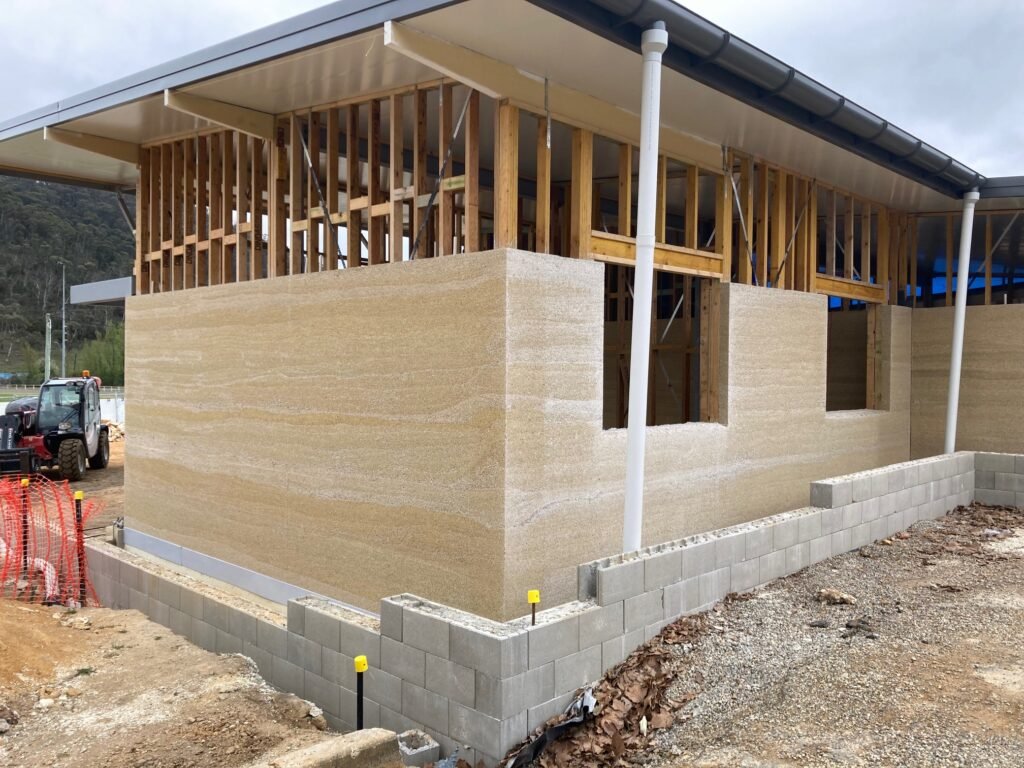
Lithgow Women’s Shed in progress
40 cubic meters of hempcrete that cloak what will be a high-performance building. The volunteers were guided by an experienced team. from Belubula Hemp Homes. Materials: AHMC. Designer: Envirotecture
Hemp building and construction construction, including hempcrete, blocks, panels, design and build services. Checkout hempbuilding.au
40 cubic meters of hempcrete that cloak what will be a high-performance building. The volunteers were guided by an experienced team. from Belubula Hemp Homes. Materials: AHMC. Designer: Envirotecture
YOUR INVITED TO A Meeting to discuss the formation of an Industrial Hemp Hub for the NSW Central West When: Friday 22 November (11:00am and finish around 3:00pm) Where: WSU Transition Hub (corner of Mort & Bridge Streets, Lithgow) What: a two-part meeting to discuss: what an Industrial Hemp Hub is and would do in the region (11:00-12:30pm) an overview and feedback on known opportunities and interests in the Lithgow and Central Western Region (1:30-3:00pm).As part of the workshop, participants will visit the Lithgow Women’s Shed, a beautiful hempcrete build in progress. Background Who suggested this meeting? John Muir is working with Ken Dodds as part of a new CRC-P (Cooperative Research Centre) funded by the Federal Government and REVOX (a private company with links to Melbourne University). They are looking at recycling materials to mix with hemp and identify ‘hubs’ within regional rural communities with enough like-minded individuals, who would be willing to share resources and experience to create working supply chains that grow and supply a range of industrial hemp products. Why Lithgow? Lithgow is now home to one of the larger public buildings constructed with hempcrete. It’s s a region where local government is highly focused on regional development (including agriculture) as the area transitions away from coal. This makes it potentially eligible for transition funding once the State Government releases its program of Transition Authorities for regions like ours. Lithgow Transition Hub (Western Sydney University) A series of workshops will be hosted in Lithgow in February as part of an academic research program aimed at generated a ‘social-license’ for growing and manufacturing products from industrial hemp. That program will be led by Prof Neil Perry (WSU) with Prof Louise Crabtree (WSU), Dr Stephen Heally (WSU) and Dr Michelle Zeibots (UTS). This November meeting is being approached as an opportunity to scope the content, structure and discussion points for the more detailed workshops in February. If you would like to attend, please contact: Dr Michelle Zeibots MPIA CILT Senior Lecturer (Transport) School of Civil & Environmental Engineering Faculty of Engineering & Information Technology University of Technology Sydney M. 0408 437 687 PO Box 123 Broadway NSW 2007 Australia

Leon and Connie Minos have been riding a wave of increased enthusiasm and demand for their Ashford Hemp Industries’ products over the past decade. Since developing their own hemp processing system in 2018 to address a bottleneck in the hemp industry, their business digressed from growing hemp in northwest NSW to designing and building the containerised Ashford Hemp Processor, or AHP. The first AHP was sold in Tasmania to the dynamic Andi Lucas of X-Hemp, followed by another sale in New Zealand and South Australia. In 2024 Ashford Hemp Industries returned focus to increasing their local hemp supply by accessing quality hemp bales in their regional area. The consistent supply of quality hurd for the building sector had been impeded by a lack of regionally available suitable hemp bales which saw the processing facility at Ashford shut down for weeks at a time. Connie and Leon are confident that this supply issue will be addressed in the coming season. Ashford Hemp Industries has been able to secure over 200 tonnes of excellent quality hemp bales from the Tamworth area, and expects this supply to more than double next year. In addition to providing employment for the small rural town of Ashford, the hemp processing facility expects to generate enough hemp hurd to allow two new house builds each week. The increase in Australian grown and processed hurd will help supply a market which is longing for quality Australian hemp in their building products. With the Ashford processing facility running at full capacity, the Minos’ look forward to building their fourth Ashford Hemp Processor later this year. Further information on Ashford Hemp Industries can be gathered from their Facebook page, website or email connie@ashfordhempindustries.com.
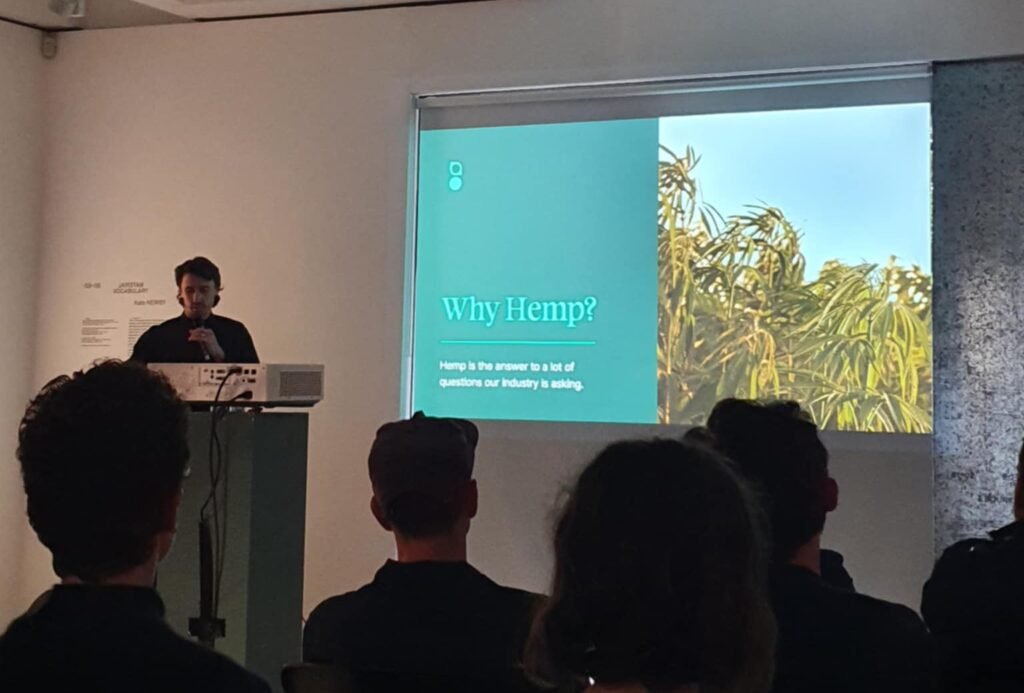
By iHempNSW member Amanda Marsh from Otetto On September 26th, we were invited to participate in a symposium titled “Little Experiments, Big Crises” hosted by Sydney University in collaboration with the Alistair Swayne Foundation. The symposium brought together architects, builders, manufacturers, and collaborators involved in the field of prefabrication. Otetto was invited to discuss the use of hemp and sustainability, during which we delivered a presentation followed by an open panel discussion with leading sustainability architect Alexander Symes, moderated by Jennifer McMaster of Trias Studio. It was an honour to contribute to such an engaging discussion focused on prefab housing in Australia, highlighting the ongoing tension between customisation and affordability. Harrison, co-founder of Otetto, showcased Otetto’s two offerings: off-the-plan hemp homes and the early developments of our Living Canvas prefabricated walling system; that save time and costs while promoting access to sustainable and healthier homes. A key takeaway from the event’s discussion was the need to shift people’s perceptions from customisation to standardisation, encouraging new home builders to embrace a curated, menu-like selection of home designs that are sustainable, accessible and highly liveable. We look forward to continuing this discussion and being part of the movement that highlights how the combination of prefabrication and locally-grown hemp is the change Australian homes need.
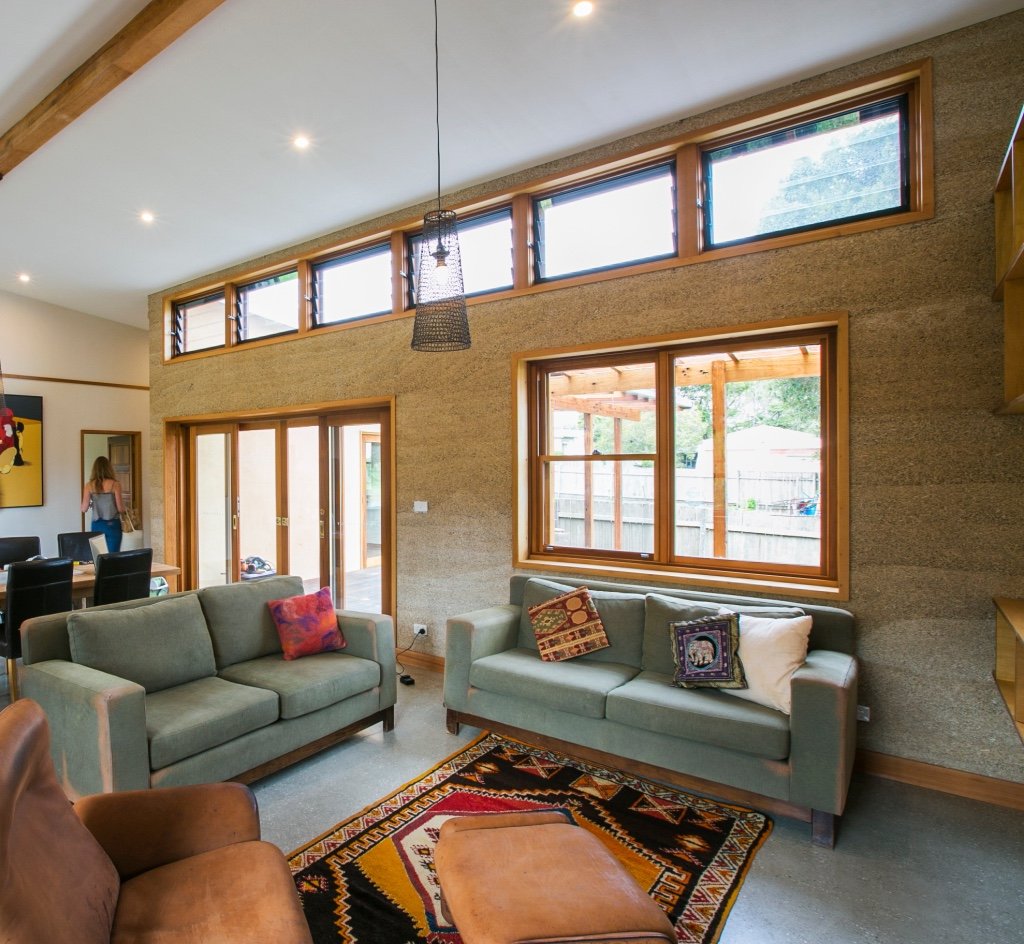
A 25 year relationship with industrial hemp A pioneer and well respected champion of hempcrete, Klara Marosszeky, Founder & Managing Director of Australian Hemp Masonry shares her 25 year relationship with industrial hemp. By Kieren Anderson Can you describe the journey of the Australian Hemp Masonry Company from its inception in 1999 to its current position in the hemp construction industry? KM: The company was officially registered in 2014, but my involvement began in 1999 when I held a research licence with the Department of Health to conduct hemp varietal trials in New South Wales (NSW). At that time, DPI’s research suggested that hemp was not viable in NSW. I was one of the few licensed growers, holding licence number 3. In 2000, after reviewing available research, I created trial mixes of hempcrete and sent them to my brother for his expert opinion. He had extensive experience in building materials research and would provide a cautious assessment. I grew 2 hectares of Futura 75 hemp in Wollombi, harvesting it with a small group using a brushcutter. We built a mini processor at the University of New South Wales (UNSW) and began a self-funded research project at the Australian Centre for Construction. Progress was slow due to part-time teaching, work with Greening Australia, and a young family. What were some of the initial challenges you faced when introducing hemp as a building material in Australia, and how did you overcome them? KM: Initially, there was no precedent in Australia, apart from a Tasmanian project using imported materials. Limited English research on hemp building and minimal technical support presented challenges. The first significant hemp project in the UK, involving two townhouses in Suffolk, was completed in 2001. We faced a steep learning curve in understanding hemp construction and its adaptation to Australia’s diverse climates. This led to the development of a construction manual detailing best practices for hempcrete in Australia. We provided one-on-one technical support for builders and owner-builders, addressing challenges such as extreme weather events like Cyclone Oswald in 2013. Could you elaborate on the research and development process behind your building products? What were the key milestones and findings during this phase? KM: Early on, we explored achieving load bearing hempcrete, misled by online claims about its high strength. We later realised that hemp’s true benefits lie in its carbon sequestration, thermal performance, vapour permeability, the improved indoor air quality it gave, rather than its load-bearing capacity. We also learned that while adding excessive binder could create a load-bearing material, it compromised other important properties of hempcrete. How do you ensure the quality and durability of your hemp building products, especially considering the diverse climates they are used in across Australia and New Zealand? KM: Ensuring quality and durability involves using well-tested products, reliable manufacturers, and understanding climate-specific installation challenges. Training installers, collaborating with building designers, and providing strong technical support are crucial. Educating builders and designers will be an ongoing task until hemp construction becomes mainstream. We share insights from diverse projects in our training courses. With more published information and guidebooks, with recommended detailing, we can address various climate conditions in Australia, from cold and wet areas to hot and dry regions, as well as high humidity areas. How have partnerships and collaborations with regional processors influenced the evolution of your products and the scalability of your operations? KM: Emissions reduction was a core part of our vision, so regional partnerships and collaborations were essential. Introducing a novel building product like hemp required demonstrating its benefits plus its emissions reduction potential to stakeholders, including politicians. Building examples and partnerships across the country helped us gain acceptance and support. Can you share some insights into the regulatory environment surrounding hemp construction materials in Australia? How has it evolved over the years? KM: The regulatory environment has improved significantly. We now receive serious consideration from certifiers and building surveyors. Media coverage, such as on the ABC, has become more informed and positive. Most projects require development consent and certifier approval. We can provide a site-specific Performance Solution, documented product testing and international research to show how our materials meet National Construction Code standards. We also ensure designs are suitable for hemp construction, considering factors like roof overhangs and local weather. This year, we ‘re contributing to developing a Standards Handbook for Hemp Construction to hopefully further streamline approvals. What are some notable residential and commercial projects where Australian Hemp Masonry products have been used? Could you highlight a few that demonstrate the versatility and performance of your materials? KM: Notable projects include the Mildura Powerhouse Project, which features three buildings funded by federal, state, and regional governments. Innovation Centre at Byron Steiner School is Australia’s first hemp school building, praised for its carbon sequestration benefits and improved indoor climate. The award-winning hemp composting loo at Wilkins Green Public School in Sydney introduced hemp construction to city residents. The Caloundra hemp home, built by the community for a family with medical needs, highlighted hemp’s suitability for community projects. In terms of sustainability, Shepherds Ground Ecovillage in the Hunter Valley showcases eight small-footprint hemp homes built with locally grown hemp and timber. Other notable projects include several award-winning homes in NSW and the upcoming refurbishment of the old Forestry building at UTAS’s Hobart Campus, featuring internal hemp walls. In what ways do you collaborate with architects, building designers, and builders to promote the adoption of hempcrete in construction projects? KM: We often receive design enquiries from individuals who have attended our training courses and approach their designers with our details and compliance information. We engage in discussions with designers and builders, especially for first-time hemp projects. Collaborating with organisations like MECLA is helping us to attract the attention of design practices, developers, and government. Looking forward, what are your goals and aspirations for the company in terms of innovation, expansion, and sustainability? KM: We are continuously involved in R&D with universities, currently collecting data on thermals, acoustics, and indoor air quality at UTS. We
Designing architectural building products by harnessing the power of hemp.
Upcoming Hemp Construction Workshops – Latest research and new build on the horizon
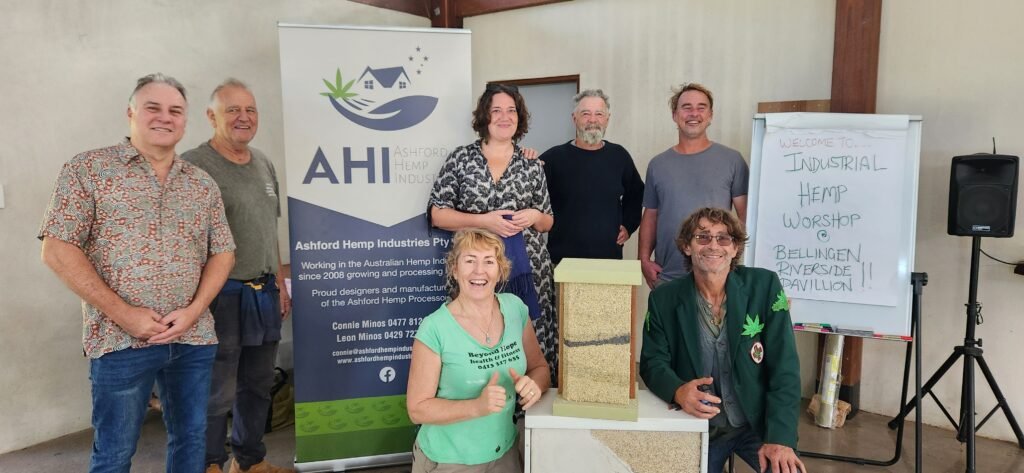
A group of local landowners came together to learn and share information about building with hemp.