
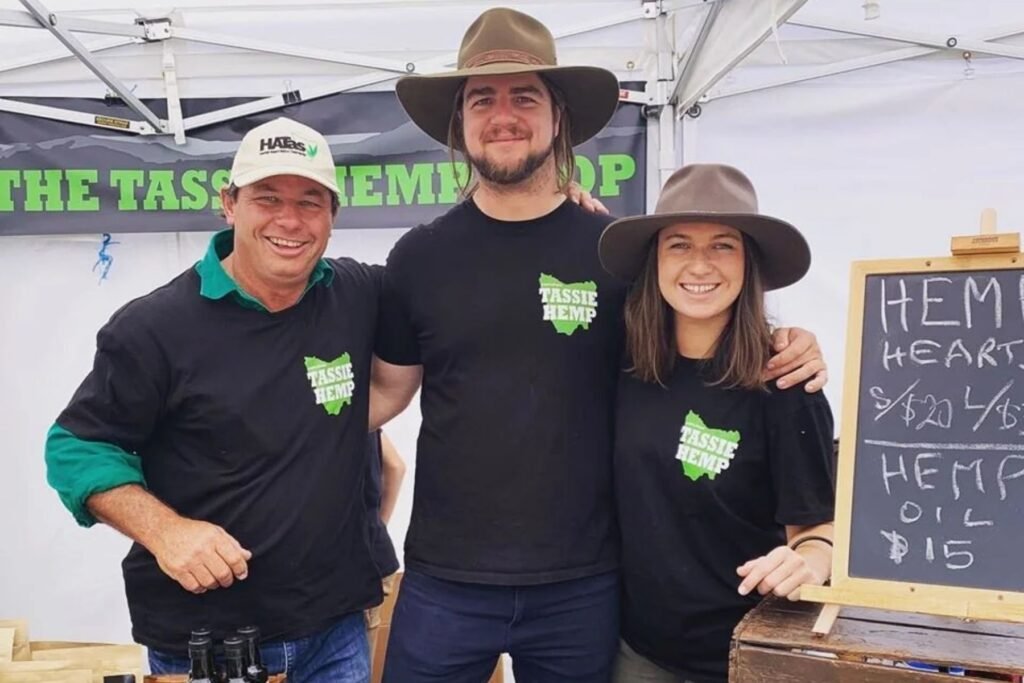
Tassie Hemp Company (Corporate Member)
Tassie Hemp Company is a family-run Tasmanian business producing premium hemp food products from Woodlands Farm in Northern Tasmania.
Hemp-based foods including seeds, protein, oils, etc
Tassie Hemp Company is a family-run Tasmanian business producing premium hemp food products from Woodlands Farm in Northern Tasmania.
Industry Response to the Senate Inquiry: Opportunities for the Development of an Industrial Hemp Industry in Australia The response to Senator Richard Colbeck’s call for submissions to the Senate Standing Committees on Rural and Regional Affairs and Transport’s inquiry into the Opportunities for the Development of an Industrial Hemp Industry in Australia was both strong and diverse, with 64 submissions received from across the nation. Submissions came from farmers, processors, researchers, builders, health and wellness product manufacturers, advocacy groups, and government agencies, reflecting the depth and breadth of interest in unlocking hemp’s full potential for Australia. A number of consistent themes emerged across the submissions. Agronomic advantages Many highlighted the agronomic advantages of hemp as a sustainable, low-input crop that fits well into regenerative farming systems, supporting soil health, carbon sequestration, and water efficiency. There was a strong emphasis on regional economic development, with hemp positioned as a diversification opportunity for farmers and a driver of new jobs in processing and manufacturing. Regulatory reform Stakeholders also focused on the urgent need for regulatory reform, calling for the removal of industrial hemp from drug-related legislation and for national harmonisation of licensing, THC thresholds, and compliance systems. The inquiry revealed that fragmented regulations are among the largest barriers to growth, limiting investment and cross-border trade. Value-added manufacturing Submissions underscored the growing potential for value-added manufacturing, particularly in hemp-based building materials, textiles, bioplastics, food, and wellness products. The construction and materials sector featured prominently, with strong calls to fast-track building code recognition for hempcrete and fibre board, and to align with international standards to enable rapid scaling. Research and development investment A further theme was the need for increased research and development investment, particularly in seed genetics, agronomy, processing technology, and product innovation. Stakeholders called for coordinated national leadership and industry collaboration to link research institutions, growers, and manufacturers. In summary Overall, the submissions presented a unified message: industrial hemp represents a significant economic, environmental, and social opportunity for Australia, but its success depends on policy alignment, investment in infrastructure, and continued cross-sector collaboration. The level of engagement in this inquiry highlights a maturing, motivated, and solutions-focused industry ready to contribute to Australia’s low-carbon, circular, and regionally based future.
By Colin Steddy Hemp Inside Pty Ltd | iHemp NSW Executive Member In late July 2025, I headed to China to reconnect with key partners and explore the latest in fiber, plastic, and board manufacturing technology for hemp. The trip was fast-paced, full of factory visits, long train rides, and great conversations over tea — but most of all, it reaffirmed just how fast hemp innovation is moving in China. Shanghai: Fiber Processing Reimagined After leaving Vacy early on July 30, I arrived in Shanghai late that night where my long-time contact, Victor, met me at the airport. We eventually found his car after a short adventure in the car park and drove three hours to the hotel, pulling in around 3:40 a.m. Despite little sleep, I was keen to see what awaited the next day. At the factory, I was impressed by the level of refinement in their fiber-processing systems. The new long-fiber line, recently upgraded, now requires only two operators instead of nine. It runs cleanly without the need for an underground pit — a big saving — and automatically bales the finished fiber. The new setup handles stalks under 5 mm thick, blowing the Hurd cleanly into a separate bin. Equally impressive was the short-fiber line, featuring a redesigned drum that treats the fiber gently, maintaining its length and softness. The integrated dust-extraction system can service both lines simultaneously, allowing any short fiber from the long-line process to be redirected — meaning virtually no waste. Although each line currently outputs about 300 kg of fiber per hour (roughly one ton combined), the modular design means five units could outperform a five-tons-per-hour European system at a fraction of the cost. That evening over supper, I reconnected with Eric, an interpreter from a previous trip, and his colleague Tim, a Dutch-born Chinese fiber specialist with a distinctly Australian sense of humor. Over coffee, we discussed how Australian hemp fiber could fit China’s high-volume textile markets. China’s grading system is still largely based on experience — “look and feel” rather than numbers — but their eye for quality is sharp. The conversation reminded me how important hands-on understanding remains in this trade. Jinan: Natural Fiber Plastics The next leg took me north by high-speed rail to Jinan. Steven from GW Plastics met me and introduced me to their automated molding operation — one worker producing a pallet of parts every three minutes. Their latest trials blend up to 80 percent natural fiber with plastic. The result is stronger, lighter, and less brittle — an ideal direction for sustainable materials. I immediately thought of potential applications for hemp, from injection-molded components to structural profiles. One idea we discussed was a “plastic rebar” or concrete straightener — using waste plastic and hemp stalks together. It’s the kind of circular solution that could really take off as green construction grows. Cement Boards and Bio-Composites From there I met Kevin, who manufactures cement board machinery used around the world. His plant featured two systems: a 100-metre heat-based line that requires glue, and a 50-metre cold-press version that doesn’t — fully automated, simple to run, and versatile. Boards ranged from thin 2 mm sheets up to 120 mm sandwich panels. This technology, combined with hemp fiber, could produce strong, lightweight, and toxin-free panels — exactly the kind of building materials the market is demanding. Every machine component met European electrical standards, meaning compatibility with Australian regulations would be straightforward. That evening, I checked into a modest hotel and ventured out for dinner, finding that everywhere I went, WeChat was the key to doing business. It’s more than just messaging; it’s the backbone of communication and payments in China. It’s clear I’ll need to set up a proper account before my next trip. Panjin: Reed and Hemp Board Futures A few days later, after a long standing-room-only train ride, I arrived in Panjin to meet Mr. Zhang, who runs a major reed-board manufacturing facility. Liz, an excellent interpreter, joined us for the tour. The factory processes 30–35,000 tons of reeds annually — material harvested from local wetlands and stored in large bales much like hay or hemp. The plant was spotless, with no visible dust and a sweet smell from the natural lignin binding the boards. Workers weren’t masked or suited up — the process itself is that clean. Over lunch, we discussed the potential for hemp as a feedstock. Mr. Zhang already had trialed hemp board and was enthusiastic about the results. He suggested partnering with Hemp Inside to test Australian hemp in his system, with the possibility of building a dedicated mill in Australia by 2027 if the economics and market align. The reed and hemp boards are almost indistinguishable by sight or touch — but hemp may prove to be the stronger and more sustainable fiber. Zhangpu: Wrapping Up and Looking Forward My final stop was Zhangpu, where I reunited with Mr. Xu — a long-term collaborator and friend. Over several days we shared meals, visited his warehouse, inspected a salt-tolerant kenaf trial, and talked late into the evenings about hemp’s future. Xu’s knowledge and network across China’s hemp and bio composite sectors continue to open new doors for collaboration. Our discussions confirmed that China is pivoting rapidly toward non-toxic, bio-based materials. Whether in fiber decortication, plastic composites, or natural boards, every manufacturer I met was seeking cleaner, simpler processes — and hemp fits perfectly into that vision. Reflections In just under two weeks, I saw firsthand how China’s manufacturing ecosystem continues to adapt and innovate around natural materials. The common thread across all these meetings was efficiency, integration, and sustainability — each factory taking steps to reduce labor, waste, and reliance on synthetic binders. For Hemp Inside and for Australia’s growing hemp industry, the opportunities are clear. By connecting our clean, high-quality raw materials with China’s processing technology and manufacturing scale, we can accelerate the development of hemp products that are competitive, sustainable, and commercially ready. As I landed back in Sydney on August 11, tired but
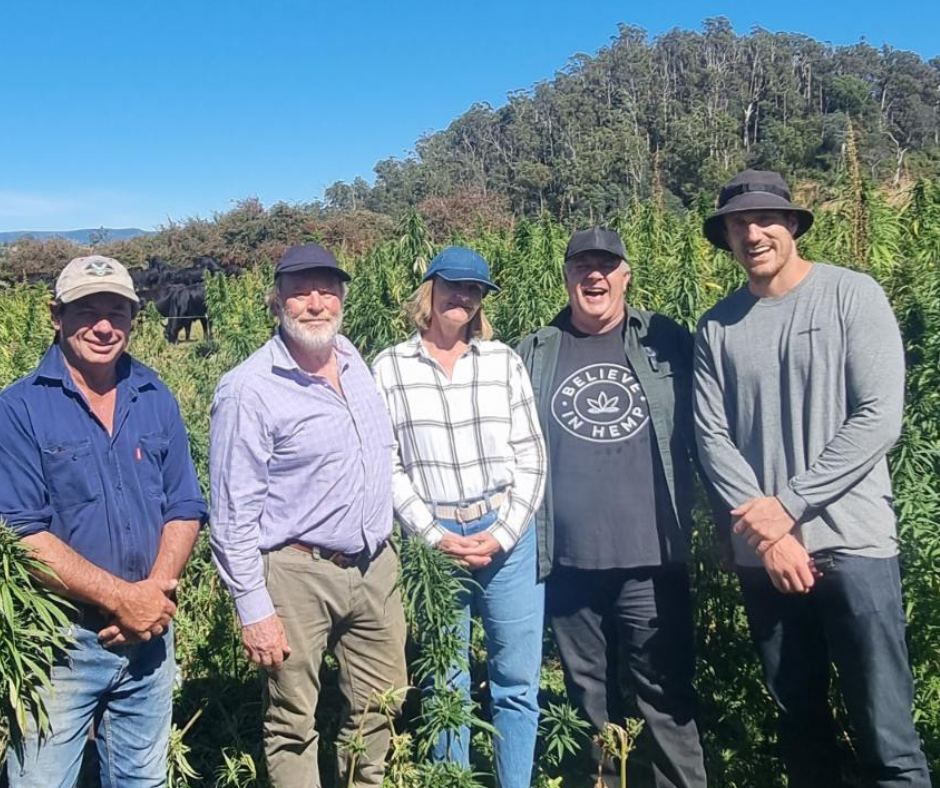
By Tim Schmidt | August 2025 Tasmania is now re-emerging as the powerhouse of hemp seed for food production in Australia. The massive stockpile from 5 years ago has disappeared and there is now a national shortage. The 2024 harvest was from a mere 34ha of hemp seed food crops, being the lowest area since 2017, the 2025 harvest jumped to 300ha and still that was not enough. The new season coming up, is forecast to be greater than 300ha. An urgent issue for the hemp seed food industry is the expiring of the spray permit for bromoxynil, an essential broadleaf herbicide which is required to help maintain profitable yields. Without this tool for production, the industry will quickly fold. This permit will expire early next year, so next year’s planting is at risk, we can only hope that the AHC will be successful in requesting an extension for the permit until work undertaken by Agrifutures produces the data required for the longer term permitted use of bromoxynil. The Tassie Hemp Co is looking to work with local wine producers and the Tasmanian Institute of Agriculture in running hemp mulch trials to show the beneficial impact on production and quality of wines using hemp mulch. There had been work conducted here 20 years ago on hemp mulch for pink lady apples which showed a distinct improvement in fruit quality, we hope to show the same for Tasmanian wines. We are very fortunate to have Hemp Harvest processing our hemp seed here near Deloraine, they have been perfecting their processes and are producing above average yield results, which is an important improvement on our industry viability in Tasmania. Checking out the crop. L- R: Tim Schmidt, Phil & Kiley Warner, Arthur Wajs and Tim Crow. Stephanie Cameron, Tim Schmidt and Senator Richard Colebeck in Tim’s last season crop.