Processors

Facilities and businesses that process raw hemp into fibre, hurd, seed, oil or intermediate materials.

Accessories, Building, Clothing, Food Products, Manufacturers, News, Newsletter, Processors

China Visit: Exploring Fiber, Plastics and Board Innovation for Hemp’s Next Leap

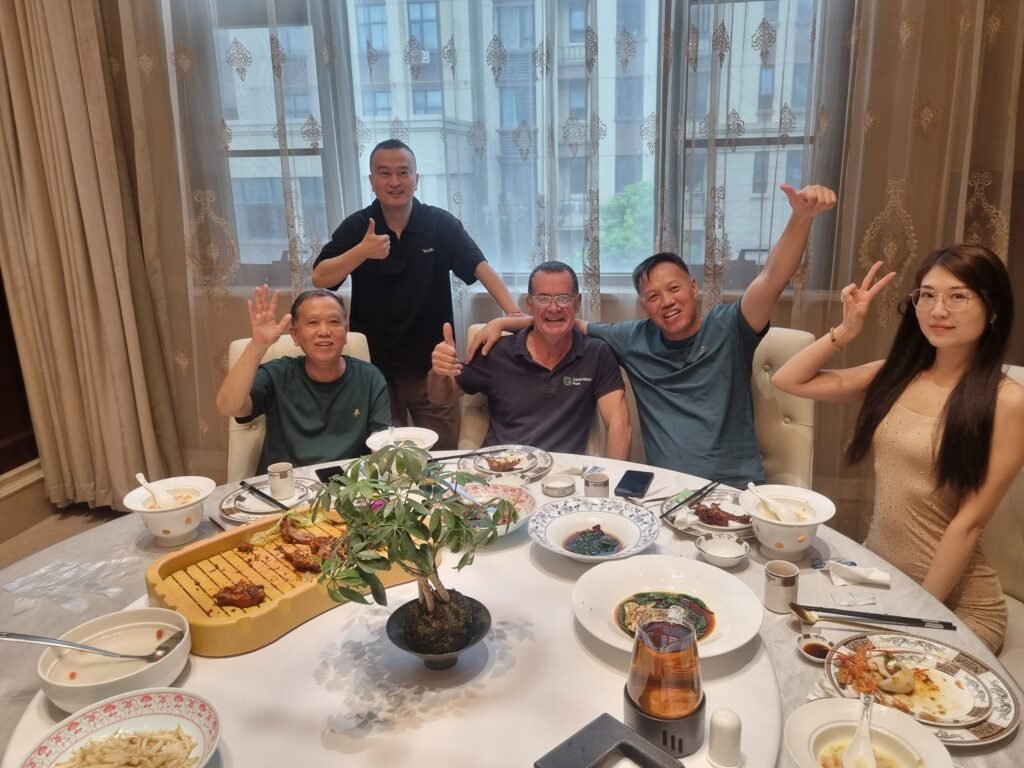
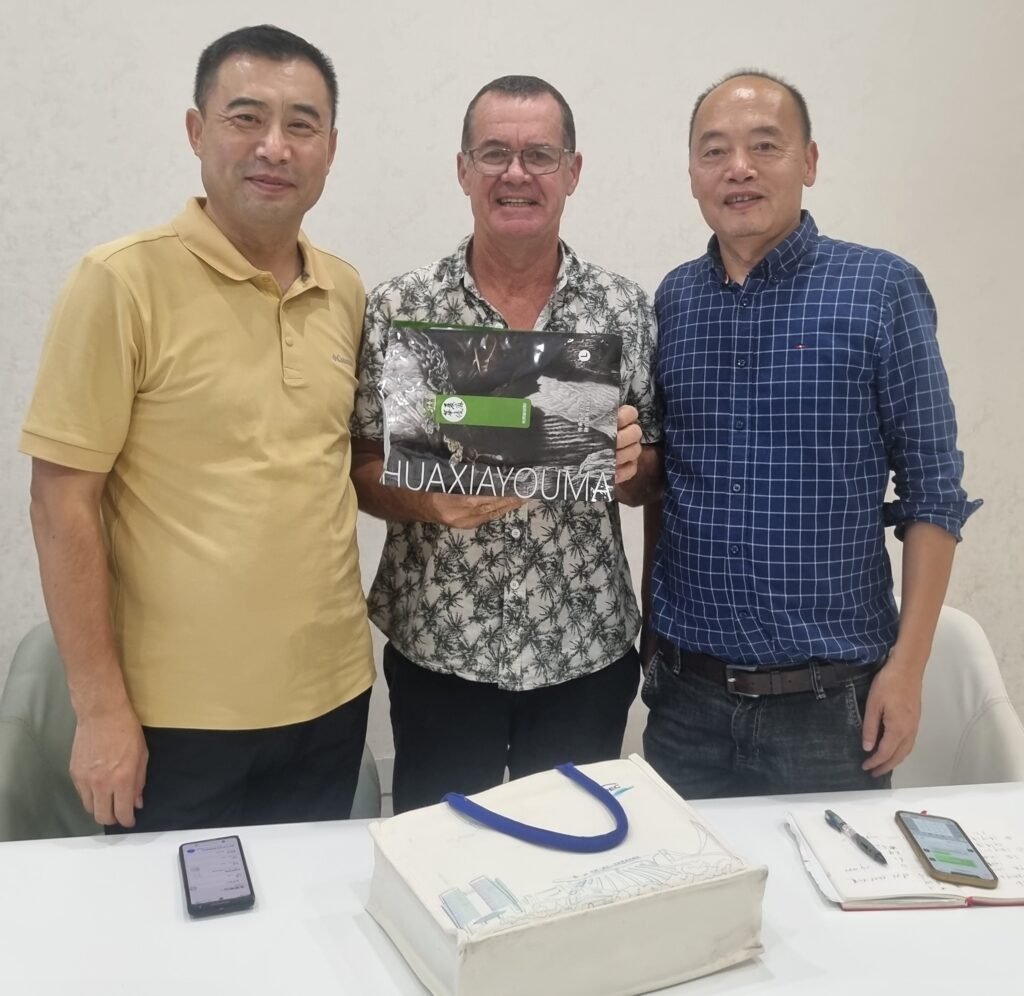
By Colin Steddy Hemp Inside Pty Ltd | iHemp NSW Executive Member In late July 2025, I headed to China to reconnect with key partners and explore the latest in fiber, plastic, and board manufacturing technology for hemp. The trip was fast-paced, full of factory visits, long train rides, and great conversations over tea — but most of all, it reaffirmed just how fast hemp innovation is moving in China. Shanghai: Fiber Processing Reimagined After leaving Vacy early on July 30, I arrived in Shanghai late that night where my long-time contact, Victor, met me at the airport. We eventually found his car after a short adventure in the car park and drove three hours to the hotel, pulling in around 3:40 a.m. Despite little sleep, I was keen to see what awaited the next day. At the factory, I was impressed by the level of refinement in their fiber-processing systems. The new long-fiber line, recently upgraded, now requires only two operators instead of nine. It runs cleanly without the need for an underground pit — a big saving — and automatically bales the finished fiber. The new setup handles stalks under 5 mm thick, blowing the Hurd cleanly into a separate bin. Equally impressive was the short-fiber line, featuring a redesigned drum that treats the fiber gently, maintaining its length and softness. The integrated dust-extraction system can service both lines simultaneously, allowing any short fiber from the long-line process to be redirected — meaning virtually no waste. Although each line currently outputs about 300 kg of fiber per hour (roughly one ton combined), the modular design means five units could outperform a five-tons-per-hour European system at a fraction of the cost. That evening over supper, I reconnected with Eric, an interpreter from a previous trip, and his colleague Tim, a Dutch-born Chinese fiber specialist with a distinctly Australian sense of humor. Over coffee, we discussed how Australian hemp fiber could fit China’s high-volume textile markets. China’s grading system is still largely based on experience — “look and feel” rather than numbers — but their eye for quality is sharp. The conversation reminded me how important hands-on understanding remains in this trade. Jinan: Natural Fiber Plastics The next leg took me north by high-speed rail to Jinan. Steven from GW Plastics met me and introduced me to their automated molding operation — one worker producing a pallet of parts every three minutes.   Their latest trials blend up to 80 percent natural fiber with plastic. The result is stronger, lighter, and less brittle — an ideal direction for sustainable materials. I immediately thought of potential applications for hemp, from injection-molded components to structural profiles. One idea we discussed was a “plastic rebar” or concrete straightener — using waste plastic and hemp stalks together. It’s the kind of circular solution that could really take off as green construction grows. Cement Boards and Bio-Composites From there I met Kevin, who manufactures cement board machinery used around the world. His plant featured two systems: a 100-metre heat-based line that requires glue, and a 50-metre cold-press version that doesn’t — fully automated, simple to run, and versatile. Boards ranged from thin 2 mm sheets up to 120 mm sandwich panels. This technology, combined with hemp fiber, could produce strong, lightweight, and toxin-free panels — exactly the kind of building materials the market is demanding. Every machine component met European electrical standards, meaning compatibility with Australian regulations would be straightforward. That evening, I checked into a modest hotel and ventured out for dinner, finding that everywhere I went, WeChat was the key to doing business. It’s more than just messaging; it’s the backbone of communication and payments in China. It’s clear I’ll need to set up a proper account before my next trip. Panjin: Reed and Hemp Board Futures A few days later, after a long standing-room-only train ride, I arrived in Panjin to meet Mr. Zhang, who runs a major reed-board manufacturing facility. Liz, an excellent interpreter, joined us for the tour. The factory processes 30–35,000 tons of reeds annually — material harvested from local wetlands and stored in large bales much like hay or hemp. The plant was spotless, with no visible dust and a sweet smell from the natural lignin binding the boards. Workers weren’t masked or suited up — the process itself is that clean. Over lunch, we discussed the potential for hemp as a feedstock. Mr. Zhang already had trialed hemp board and was enthusiastic about the results. He suggested partnering with Hemp Inside to test Australian hemp in his system, with the possibility of building a dedicated mill in Australia by 2027 if the economics and market align. The reed and hemp boards are almost indistinguishable by sight or touch — but hemp may prove to be the stronger and more sustainable fiber. Zhangpu: Wrapping Up and Looking Forward My final stop was Zhangpu, where I reunited with Mr. Xu — a long-term collaborator and friend. Over several days we shared meals, visited his warehouse, inspected a salt-tolerant kenaf trial, and talked late into the evenings about hemp’s future. Xu’s knowledge and network across China’s hemp and bio composite sectors continue to open new doors for collaboration. Our discussions confirmed that China is pivoting rapidly toward non-toxic, bio-based materials. Whether in fiber decortication, plastic composites, or natural boards, every manufacturer I met was seeking cleaner, simpler processes — and hemp fits perfectly into that vision. Reflections In just under two weeks, I saw firsthand how China’s manufacturing ecosystem continues to adapt and innovate around natural materials. The common thread across all these meetings was efficiency, integration, and sustainability — each factory taking steps to reduce labor, waste, and reliance on synthetic binders. For Hemp Inside and for Australia’s growing hemp industry, the opportunities are clear. By connecting our clean, high-quality raw materials with China’s processing technology and manufacturing scale, we can accelerate the development of hemp products that are competitive, sustainable, and commercially ready. As I landed back in Sydney on August 11, tired but

Manufacturers, News, Processors

Understanding Health Hazards in Hemp Processing

By Dr Maggie Davidson MAIOH, Senior Lecturer, Environmental Health & Occupation Hygiene, School of Science, Western Sydney University. Farming is one of the most hazardous jobs. Farmers often live where they work, so there’s little time for rest — especially for their lungs. While accidents are common, long-term health risks from dust, noise, and chemicals often get overlooked. In hemp processing, dust and noise are big issues. But we still know very little about how much dust and noise are actually produced, or which tasks cause the most exposure. This information is important because it helps us find better ways to protect processors, farmers and workers and prevent serious health problems. Organic dust from hemp can cause serious lung issues. Inhaling a lot of dust can lead to: Airway irritation and allergies Byssinosis (“Monday morning fever”) Farmers’ lung (hypersensitivity pneumonitis) Chronic bronchitis What We Did From January to March 2025, we visited hemp processors to observe the work environment and measure dust and noise levels. We took dust samples from the air around workers during different jobs like loading machines, bagging products, cleaning, and maintenance. Dust particles we measured were tiny — less than one-tenth the width of a human hair — meaning they can easily reach deep into the lungs. Key Findings Dust levels peaked at 1.0 to 3.0 mg/m³ during dry sweeping and using air blowers. Loading hammer mills and decorticators produced 0.5 to 1.0 mg/m³ of dust. Safe Work Australia sets the exposure limit at 1.0 mg/m³ over an 8-hour shift. So, sweeping and blowing created dangerous levels. Some dust contained respirable silica, which can cause severe lung disease. Levels reached up to 0.045 mg/m³, close to the legal limit of 0.05 mg/m³. Biggest Risk Areas Loading hammer mills and decorticators Cleaning dust filtration systems Using blowers and dry sweeping What Needs to Change To protect workers: Stop using blowers and dry sweeping immediately — they create the most dust. Use wet cleaning methods and HEPA H-Class vacuums (AS/NZS 60335.2.69 standard). Apply the Hierarchy of Controls: Eliminate/Substitute: Only buy clean, quality hemp with no mould, dust, or contamination. Engineering/Isolation: Install barriers and dust extraction systems to trap dust before it spreads. Administrative Controls: Schedule regular cleaning and machine maintenance. Ban sweeping and air blowers. Personal Protective Equipment (PPE): Supply and train workers to properly use Class 2 or 3 respirators, fitted and tested for the right protection. Where to Find Help Safe Work Australia has excellent free resources: Managing Work Health and Safety Risks Managing Hazardous Chemicals Preventing Hearing Loss at Work What’s Next We are working with hemp processors to develop dust and noise management plans. We’ll revisit them in 2025–2026 to see how improvements are going and share updates at industry events later in 2025. Thank You A huge thanks to the farmers, businesses, and partners who welcomed us. Special thanks to the AIOH Foundation and Western Sydney University for funding this important work.    

Manufacturers, News, Processors

An Industrial Hemp Hub for NSW Central West

YOUR INVITED TO A Meeting to discuss the formation of an Industrial Hemp Hub for the NSW Central West  When: Friday 22 November (11:00am and finish around 3:00pm) Where: WSU Transition Hub (corner of Mort & Bridge Streets, Lithgow) What: a two-part meeting to discuss:  what an Industrial Hemp Hub is and would do in the region (11:00-12:30pm)  an overview and feedback on known opportunities and interests in the Lithgow and Central Western Region (1:30-3:00pm). As part of the workshop, participants will visit the Lithgow Women’s Shed, a beautiful hempcrete build in progress. Background Who suggested this meeting? John Muir is working with Ken Dodds as part of a new CRC-P (Cooperative Research Centre) funded by the Federal Government and REVOX (a private company with links to Melbourne University). They are looking at recycling materials to mix with hemp and identify ‘hubs’ within regional rural communities with enough like-minded individuals, who would be willing to share resources and experience to create working supply chains that grow and supply a range of industrial hemp products. Why Lithgow? Lithgow is now home to one of the larger public buildings constructed with hempcrete. It’s s a region where local government is highly focused on regional development (including agriculture) as the area transitions away from coal. This makes it potentially eligible for transition funding once the State Government releases its program of Transition Authorities for regions like ours. Lithgow Transition Hub (Western Sydney University) A series of workshops will be hosted in Lithgow in February as part of an academic research program aimed at generated a ‘social-license’ for growing and manufacturing products from industrial hemp. That program will be led by Prof Neil Perry (WSU) with Prof Louise Crabtree (WSU), Dr Stephen Heally (WSU) and Dr Michelle Zeibots (UTS). This November meeting is being approached as an opportunity to scope the content, structure and discussion points for the more detailed workshops in February. If you would like to attend, please contact: Dr Michelle Zeibots MPIA CILT Senior Lecturer (Transport) School of Civil & Environmental Engineering Faculty of Engineering & Information Technology University of Technology Sydney M. 0408 437 687 PO Box 123 Broadway NSW 2007 Australia

Manufacturers, News, Processors

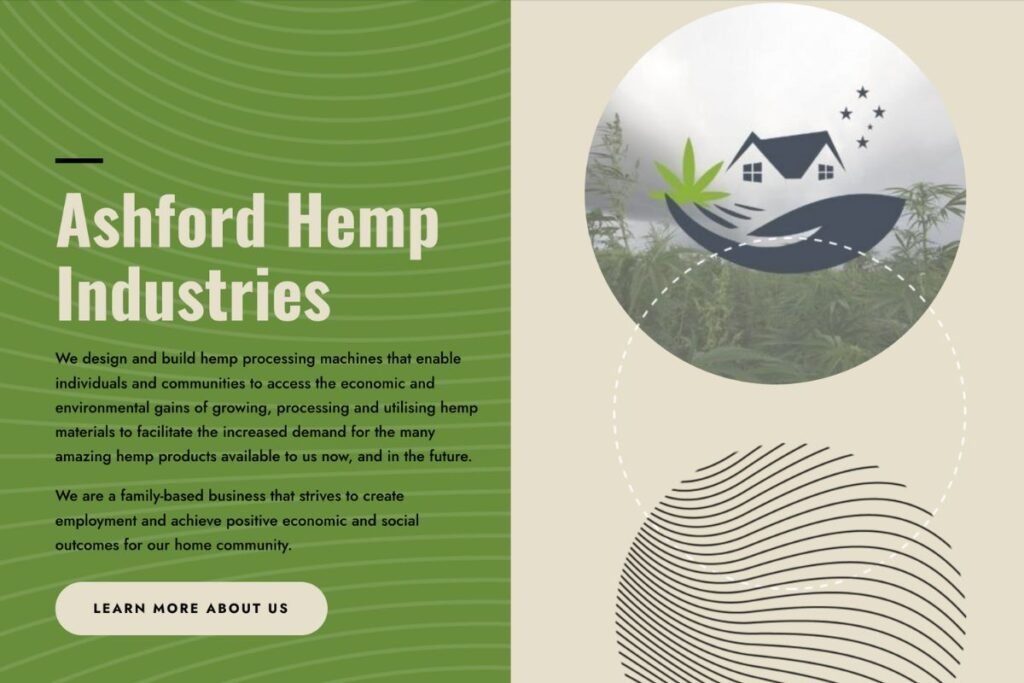
Ashford Hemp Industries processing for the building industry

  Leon and Connie Minos have been riding a wave of increased enthusiasm and demand for their Ashford Hemp Industries’ products over the past decade.  Since developing their own hemp processing system in 2018 to address a bottleneck in the hemp industry, their business digressed from growing hemp in northwest NSW to designing and building the containerised Ashford Hemp Processor, or AHP. The first AHP was sold in Tasmania to the dynamic Andi Lucas of X-Hemp, followed by another sale in New Zealand and South Australia.  In 2024 Ashford Hemp Industries returned focus to increasing their local hemp supply by accessing quality hemp bales in their regional area. The consistent supply of quality hurd for the building sector had been impeded by a lack of regionally available suitable hemp bales which saw the processing facility at Ashford shut down for weeks at a time.  Connie and Leon are confident that this supply issue will be addressed in the coming season. Ashford Hemp Industries has been able to secure over 200 tonnes of excellent quality hemp bales from the Tamworth area, and expects this supply to more than double next year. In addition to providing employment for the small rural town of Ashford, the hemp processing facility expects to generate enough hemp hurd to allow two new house builds each week.  The increase in Australian grown and processed hurd will help supply a market which is longing for quality Australian hemp in their building products. With the Ashford processing facility running at full capacity, the Minos’ look forward to building their fourth Ashford Hemp Processor later this year.  Further information on Ashford Hemp Industries can be gathered from their Facebook page, website or email connie@ashfordhempindustries.com.

Scroll to Top