The recent Senate Rural and Regional Affairs and Transport References Committee inquiry into opportunities for the development of a hemp industry in Australia provides one of the clearest snapshots to date of where the sector stands, and what must happen next.
For members of iHemp NSW, the findings reinforce what many already experience on the ground: strong potential across multiple sectors – seed, food, fibre, building and wellness – but persistent structural barriers preventing scale.
This article distils the key takeaways, based on the official transcript and industry contributions.
A sector full of promise – but not yet aligned
The tone of the inquiry is broadly constructive. Across submissions and testimony, there is consistent agreement that industrial hemp represents a multi-industry opportunity for Australia. Spanning agriculture, manufacturing, health products, and construction.
However, the dominant theme is fragmentation.
“We’ve got the opportunity, but we don’t yet have the coordination to realise it.”
That lack of alignment shows up in regulation, investment, processing, and market development.
The biggest barrier: inconsistent THC regulation
One of the most repeated and widely supported points in the inquiry is the need to address THC limits.
Currently, Australia operates under a 0.35% THC threshold, with variations between states in interpretation and enforcement. This creates risk and uncertainty for growers.
A strong body of evidence presented to the committee supports moving to a 1% THC limit, aligning Australia with international standards.
“If we want to be globally competitive, we need to harmonise with where the rest of the world is heading.” Senator Richard Colbeck
Why this matters:
- Reduces risk of crops being destroyed
- Improves yield and plant resilience
- Encourages farmer participation
- Attracts investment into cultivation
Key takeaway: Regulatory harmonisation is one of the lowest-friction, highest-impact changes available to government.
iHemp NSW understands that seed needs to be under 0.5% and fibre 1% as per regulation:
(c) a licensee may only use seed that is supplied on the basis that it will not produce hemp that has a concentration of THC (in its leaves and flowering heads) of more than 0.5%,
(d) a licensee must take all necessary steps to ensure that any hemp cultivated by the licensee has a concentration of THC (in its leaves and flowering heads) that does not exceed 1%,
NSW DPI – NSW Hemp Industry (official government page) https://www.dpi.nsw.gov.au/agriculture/broadacre-crops/summer-crops/hemp/nsw-hemp-industry
The “chicken and egg” problem remains unresolved
A central issue identified throughout the inquiry is the structural stalemate between supply and demand.
- Farmers are hesitant to plant without guaranteed markets
- Processors won’t invest without reliable supply
- End-users require consistent volume and pricing
“To move from a fibre crop to a functioning end-use industry, you don’t just need primary processing like decortication—you also need secondary processing to turn materials into viable products, whether that’s plastics, building materials or food. You have to separate and use each component efficiently in a balanced system. One part of the industry can’t outpace the others, or the economics fall out of balance.”
Senator Dilligan
This loop continues to constrain growth across all hemp sectors, not just fibre.
Impacted areas:
- Seed and food: scaling beyond niche health markets
- Fibre and hurd: reliable supply for construction and manufacturing
- Wellness products: consistency and compliance confidence
Key takeaway: Breaking this cycle requires coordinated intervention, not isolated efforts.
Processing infrastructure is the missing middle
The inquiry highlights a critical gap: lack of processing capacity, particularly decortication.
Without this infrastructure:
- Farmers have limited buyers
- Raw material cannot be converted efficiently
- Value-add remains offshore or unrealised
Figures discussed indicate:
- ~4,000 hectares currently planted nationally
- ~5,000 hectares needed for early viability
- ~50,000 hectares required for a mature industry
We’re not at scale yet, and without scale, the economics don’t stack up well.
This applies across:
- Food processing facilities (dehulling, oil extraction)
- Fibre processing (decortication, refinement)
- Manufacturing inputs (consistent material streams)
Key takeaway: Processing is the critical unlock point for the entire hemp value chain.
Seed and food: steady growth, but capped potential
The food sector is one of the more established parts of the industry since regulatory approval in 2017. Products such as hemp seeds, oils, and protein powders are already in market.
However, growth is constrained by:
- Limited domestic supply
- Price sensitivity compared to imported products
- Lack of large-scale processing
We’ve proven the market exists. Now it’s about scaling supply competitively.
There is also ongoing discussion around:
- Export opportunities
- Functional foods and nutrition markets
- Integration into mainstream agriculture
Key takeaway: Food is a proven entry point, but requires scale to compete globally.
Senate hemp industry inquiry – key takeaways for NSW and beyond
Fibre and building: strong potential, but dependent on scale
While not the primary focus of the inquiry, fibre applications, including building materials, are consistently recognised as high-value opportunities.
This includes:
- Hempcrete and bio-based construction materials
- Fibre for insulation and composites
- Industrial uses across manufacturing
However, the same constraints apply:
- Inconsistent supply
- Limited processing
- Lack of standardisation
The demand signals are there, particularly in low-carbon construction, but supply chains need to catch up. But for the supply chains to have the consistency they need increasing the uptake of hempcrete in building is imperative. Education and Advocacy around Hemp Building is the key factor. If people know how amazing a hemp home is when it comes to insulation, BAL (bush fire attack level), comfort, health and savings on power bills then the demand will follow.
Notes Jeremy Thomas – who was not part of the Parliament House Streaming
Environmentarian / Hemp Building Directory / iHemp NSW Secretary
For the building sector specifically:
- Growing interest in low-carbon materials
- Alignment with sustainability and housing policy
- Potential for regional manufacturing jobs
Key takeaway: Building is a significant downstream opportunity, but relies on upstream industry development.
Wellness: opportunity shaped by regulation
The wellness segment, including CBD and related products, is acknowledged but remains tightly constrained by regulation.
Issues raised include:
- Complex approval pathways
- Consumer access limitations
- Lack of clarity for producers
While not the central focus of this inquiry, it remains part of the broader industry ecosystem.
Key takeaway: Regulatory clarity will determine the pace of growth in this segment.
Research, data, and carbon credentials
Another consistent theme is the need for credible data and research.
This includes:
- Lifecycle analysis (LCA)
- Carbon sequestration metrics
- Agronomic data
- Product performance standards
We need the data to back the claims, and unlock larger markets.
This is particularly relevant for:
- Construction materials (carbon accounting)
- Agriculture (soil health, rotations)
- Policy alignment (net zero targets)
Key takeaway:
Evidence-based validation is essential for scaling industry credibility and investment.
Government’s role: coordination, not just support
The inquiry makes it clear that passive support will not be enough.
What is needed:
- National coordination across states
- Targeted funding for infrastructure
- Policy alignment with climate and manufacturing goals
Potential funding pathways mentioned include:
- Clean energy and low-emissions programs
- Regional development funds
- Advanced manufacturing initiatives
This isn’t just an agricultural opportunity, it’s an industrial one.
Key takeaway: Government has a role as a market enabler and coordinator, not just a regulator.
Emerging industrial applications
Emerging applications such as bioplastics and advanced composites, reflecting broader global trends.
However, these are framed as longer-term opportunities, dependent on:
- Scale
- Processing capability
- R&D investment
Key takeaway: These applications are promising but not immediate priorities.
What this means for iHemp NSW members
Across all segments, farmers, food producers, builders, manufacturers, and wellness operators, the implications are consistent:
1. The opportunity is real
There is strong institutional recognition of hemp’s role in Australia’s future economy.
2. Scale is the next challenge
Growth will depend on coordinated expansion, not isolated success stories.
3. Policy change is possible, but not guaranteed
The inquiry signals direction, not immediate implementation.
4. Collaboration is essential
No single part of the industry can scale alone.
Pulling it together
The Senate hemp industry inquiry does not deliver a single breakthrough decision, but it does something equally important:
It validates the industry’s challenges and opportunities at a national level.
The pathway is clear. The question is whether we act on it.
For iHemp NSW and its members, this is a moment to:
- Advocate for harmonised regulation
- Support infrastructure development
- Strengthen cross-sector collaboration
- Continue building market demand
Conclusion
The Senate hemp industry inquiry: key takeaways point to an industry on the edge of expansion, but still constrained by structural barriers.
There is no shortage of demand signals:
- Health-conscious consumers
- Sustainable construction
- Regenerative agriculture
- Low-carbon manufacturing
What’s missing is alignment.
If regulatory reform, infrastructure investment, and coordinated policy support can be achieved, Australia’s hemp industry has a clear pathway from emerging sector to mainstream contributor.
IHemp NSW, will have a seat at the table when the Senate Standing Committee holds its final public hearing into opportunities available in the Australian hemp industry in Canberra on 15 May. Read the media release here. Read iHemp NSW’s submission here.
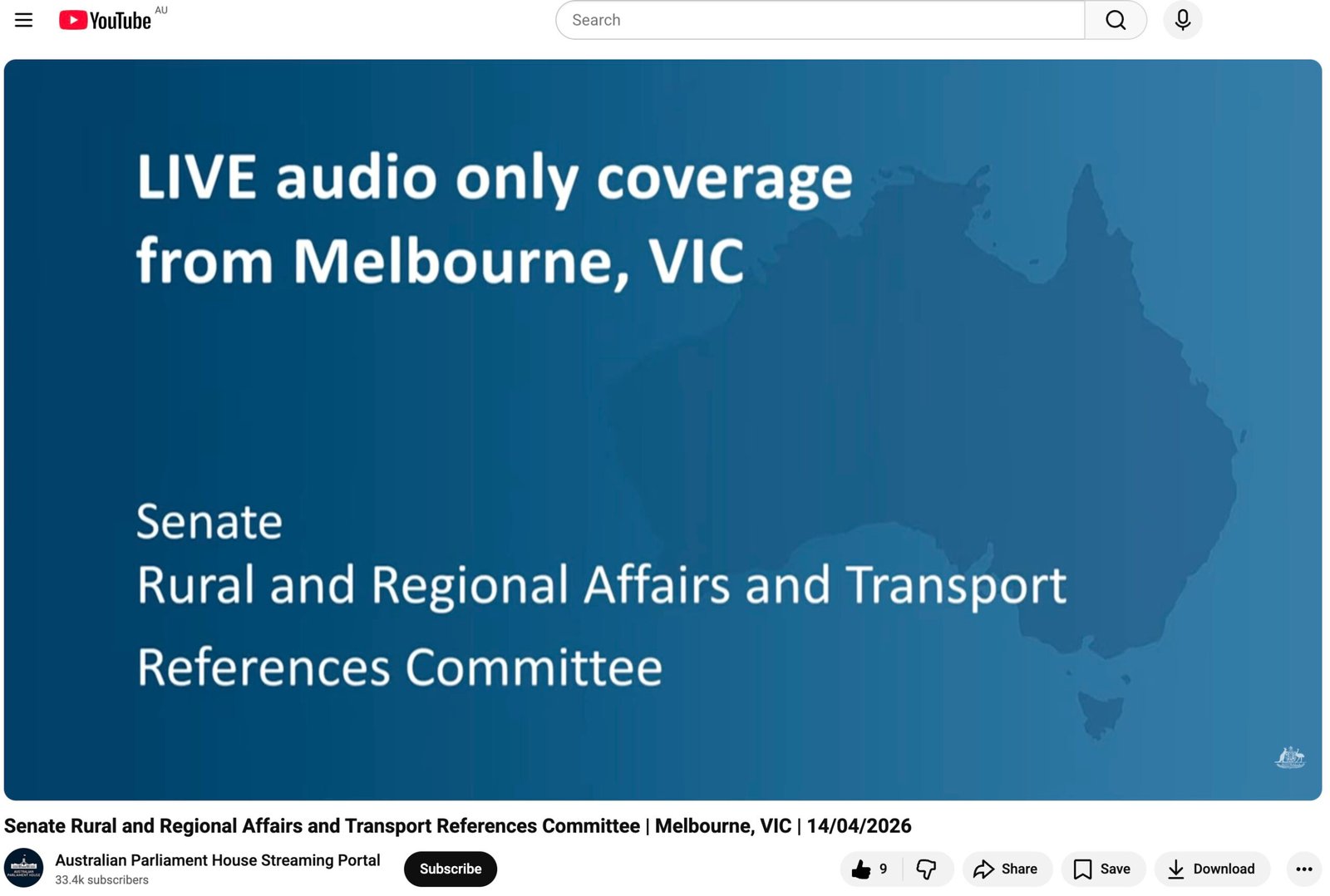
This article was compiled by Jeremy Thomas based on the Senate inquiry transcript and the following public hearing recording:
https://www.youtube.com/live/jNZWPUQuCB4
Listen to the full video.