My Amazing Visit to China – By Colin Steddy
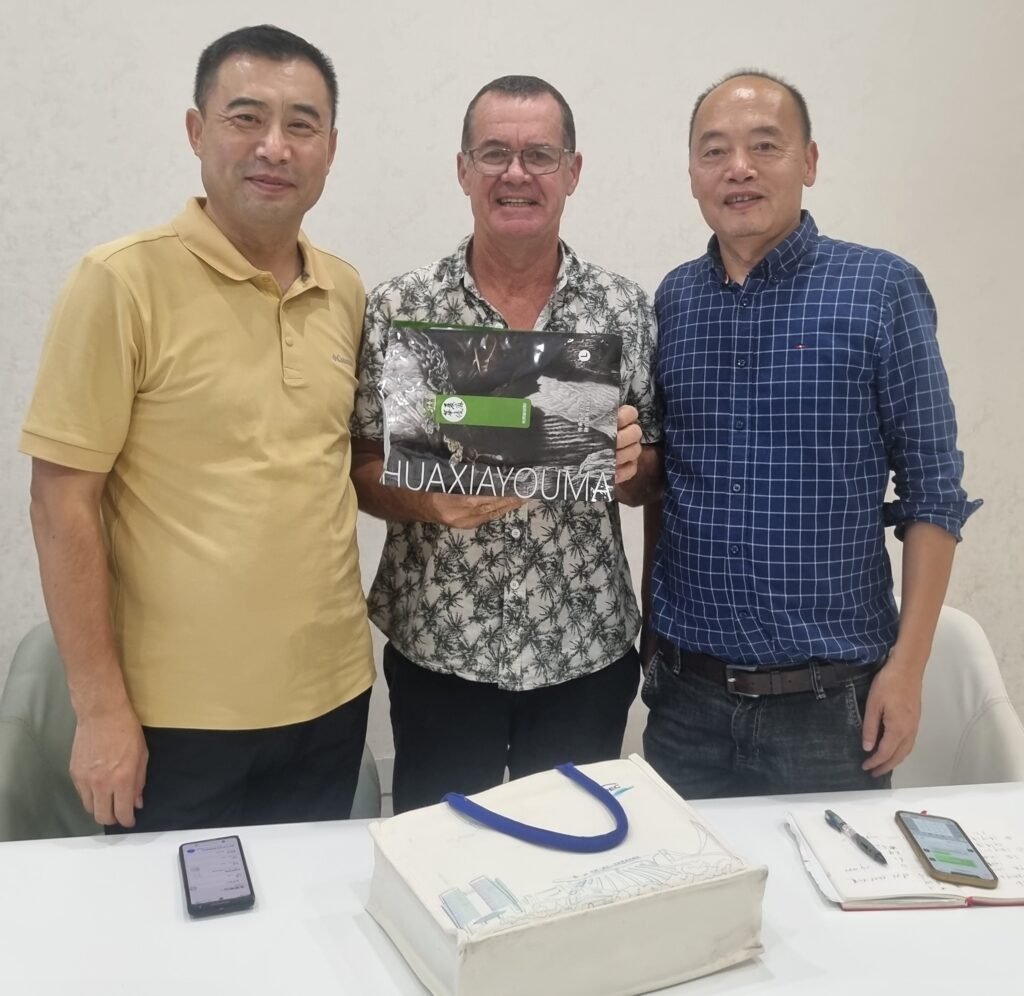
My Amazing Visit to China 4 -16 October 2024 By Colin Steddy – Hemp Inside Access to seed I flew to Xiamen and was driven to Zhangpu, to catchup with Mr Xu and his father Rong Long from ZHANGPU ZHONGLONG KENAF SEEDS CO, LTD. I first imported seed from Xu in 2017 after my visit in 2016 and have kept close contact since. We have formed a strong relationship. Working together with ideas on how to do more than just seed. China can now get permits to grow in most parts of China. The THC must be below 0.35 unless you have a breeding licence. Mr Xu has a breeding program with a government centre in China, paid for by Xu, looking at hybrid hemp seed production. For me, it was an interesting site visit because: we are talking new varieties of hemp the breeding program is looking at 4 tonnes per ha, so hemp can compete with soy. Currently there is a world shortage of hemp seed for food and planting seed. I am hearing reports of low yields and low germination across the world. ZHANGPU ZHONGLONG KENAF SEEDS CO, LTD has potential to produce eight hundred tonnes of planting seed for export around the world. Hunter Valley Hemp Seed & Grain, a new enterprise with Bob and Susan Doyle and myself. We will be growing the Chinese varieties in early 2025 for planting in the 2025 September season. We will also export. Please contact me for information. Details below. Research needed New research needs to be done on the flowering and pollen drop with dioicous varieties. With the findings that seed from around the world is having issues with low seed germination and bad vigour. We thought this was to do with heat and temperature; there is more to learn about the flowering times especially in diecious varieties. Mr Xu and I have been working on a seed testing protocol. When male pollen falls, are the females ready and what are the weather conditions? Is it cold and wet are the day length short? This looks like the results at Hamilton in Victoria for the long season varieties. Because of cold short days there was little seed produced exactly as I have been suggesting. Long season seed crops should be grown in the north then moved south for fibre and biomass production. Could this also be a result of germination rates falling quickly and low plant vigour? We are looking for the collection of flowering and weather conditions in relation to germination rate drop and low seed vigour. I would like our researchers to look at this. Exploring seed testing protocols We are looking at building new seed testing protocols on how to monitor what might happen with seed longevity. The hemp industry in Australia needs to keep all data from planting and fertiliser inputs and timing. What triggers THC spikes? Why do seeds loose germination? Fibre quality, planting density (plants per m2) and fertilise can have an enormous impact. Let alone how the machinery and retting occur. Know the spec from the end user? In the north of Australia long season varieties continually get higher grain yields. South European, and some Australian varieties do better than in the hot north. How you move the varieties in latitude will give you a different outcome, seed size, yield, or biomass. This also happens in China just south to north. See AgriFutures hemp trial results from all sites in Australia. The one thing that has not been calculated in the result is grain yield/price and biomass price. As a grower we need to know the total income from a crop. You can work this out yourself. Find the yields of biomass and seed and give them a value on current market. I work on $2.65 for grain and $3.50 for biomass as the stalk is less value than just a biomass crop. Currently in China there is a large demand for hemp fibre and China is sourcing fibre from every corner of the world. Is your fibre going into textiles, insulation, weed matting or paper? Each end product requires different specs and price. How much hurd can be in the fibre? Or is it a whole stalk product? My visit to a textile mill I visited a textile mill in Shanghai (CPL) that want to purchase textile fibre from Australia; the mill makes clothing, with hemp blended with other fibres. Lisa was my interpreter and looked after me. Their demand is growing, and they could be looking for up to 10,000 tonnes! Once again, I was treated like a king and taken to dinner and sightseeing to Xitang, an old Chinese town. Usually it is very crowed, but it was raining and was thankfully incredibly quiet. The market was a maze of thin walkways with shops selling food and a vast array of items big and small. It was very beautiful. This mill has a contact living in South Australia. His name is Yao Yang, and he kindly organised my visit. I wanted to see the fibre quality they need so I can help Australian growers and processors meet the specifications. Today there is a massive shortage of textile hemp fibre – how long it will last, we do not know. I introduced them to Mr Xu, my friend in Zhangpu. Unlike Australia, the industry in China is large and they were not familiar with each other. Along with Lisa, my interpreter, Mr Chunlei Hou and Professor Fan, a polymer academic took me to lunch. They were very warm and friendly. Before we drove to the mill, we discussed growing the right fibre, retting and what spec they need. They have some samples from Australia that need to have less hurd – below 10% is ok. The only mill I know that is close to their spec is Gary Rogers in WA and Bob and Susan Doyles’ that needs a few modifications to clean the fibre and the dust extraction.