12 March 2026

News, Accessories, Building, Clothing, Education, Growers, Newsletter

In memoriam – Beatrice Kuyumgian-Rankin

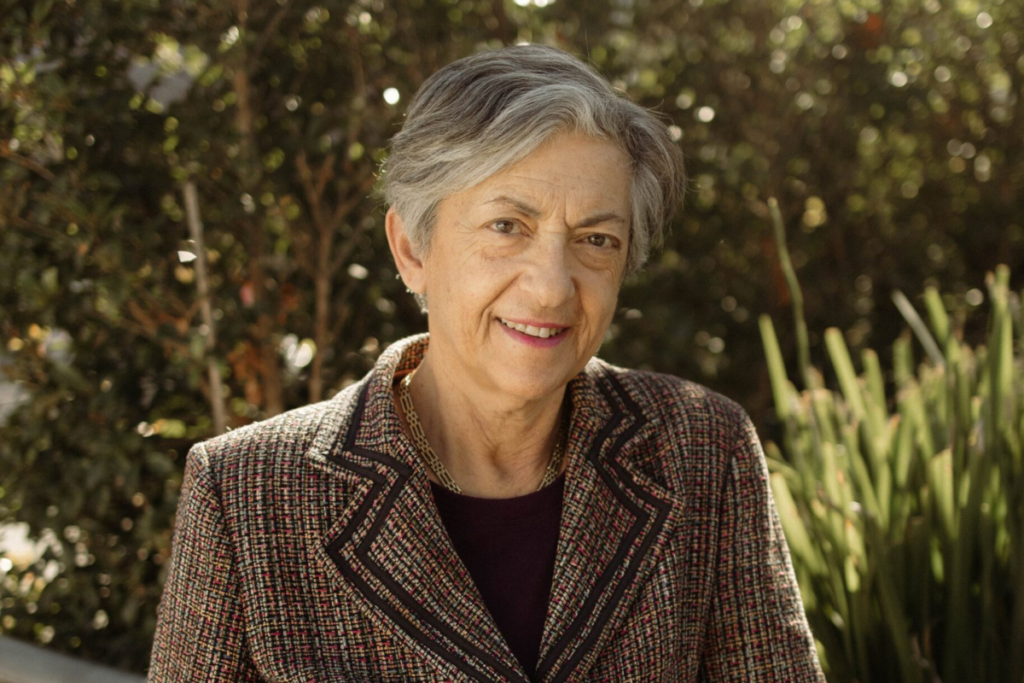
Beatrice was one of those rare people who leaves an indelible mark on everyone fortunate enough to cross her path. Through conversations, meetings, and the many expos she attended, those around her were constantly struck by her extraordinary spirit. She possessed a quiet yet powerful energy that was impossible not to feel, the kind that draws you in and lifts you up simply by being in her presence. She was inspiring in the truest sense of the word, not because she tried to be, but because it was simply who she was at her core. Her motivation was infectious. Whether she was sharing her thoughts, her stories, or her wisdom, there was always a sense that she approached life with intention and grace. She didn’t just live, she lived fully and wholeheartedly, and she had a remarkable gift for making those around her feel seen, valued, and encouraged to do the same. To have known her was an immeasurable privilege. Not everyone in this life gets to encounter someone who moves them so deeply, and Beatrice was undeniably that person for so many. She was, in every sense of the word, remarkable and she will be profoundly missed. 1960 – 2026Co-Founder, Hemp Gallery · Pioneer of Industrial Hemp in Australia The Australian hemp community mourns the passing of Beatrice Kuyumgian-Rankin, a woman of extraordinary courage, conviction, and compassion, whose lifelong mission to bring industrial hemp into the Australian mainstream leaves a legacy that will endure long after her. Beatrice was not a farmer, not a scientist, not a politician. She was a pianist, a mother, a migrant, and a believer – and perhaps that is precisely what made her so remarkable. A Life Shaped by Music and Migration Born in Istanbul in 1960 to a family of Armenian-French heritage, Beatrice arrived in Australia in 1972 as a young teenager, settling with her family and continuing her passion for classical piano at the Sydney Conservatorium of Music. She had the talent and the discipline to become a concert pianist, and the world may well have known her that way, had life not taken its turns. At 19, cultural expectations led Beatrice into an arranged marriage, and motherhood reshaped her path. Rather than set aside her gift for music entirely, she channelled it into the next generation, opening a music school for children in Chatswood with a family friend. Once a teacher, always a teacher; it was a calling that would define everything she did. A New Calling: The Wonder Plant It was in her second marriage that Beatrice’s life took its most unexpected and defining turn. Her husband Ray introduced her to industrial hemp, and something ignited in her that never went out. She was 42 years old. Confronted with the realities of fossil fuel dependence, deforestation, and a wasteful linear economy, Beatrice found in hemp a plant that seemed to answer so many of the world’s most urgent questions. She threw herself into learning everything she could. How had this plant, capable of producing food, fibre, shelter, medicine, fuel, and plastics, come to be so misunderstood? How had ninety years of misinformation stripped it of its rightful place in Australian life? And how could one woman change that? “Why use up the forests which were centuries in the making and the mines which required ages to lay down, if we can get the equivalent of forest and mineral products in the annual growth of the hemp fields?” — Henry Ford, a quote Beatrice returned to again and again Beatrice and Ray applied for a license to grow industrial hemp, (license #4), no small feat for a city girl with no farming background and not a hectare of land to her name. Armed with a kilogram of hemp seed and boundless determination, she turned to the one network she knew best, the world of classical music. Conversations sparked memories. Older musicians shared stories of grandparents growing hemp in the Hunter Valley before it was outlawed in the 1930s. History, it turned out, was on her side. “Every farm had to grow at least one acre of hemp to take care of their basic needs, otherwise they were taxed extra,” Beatrice would tell anyone who would listen. “Australia survived two famines at the turn of the century, living on hemp foods from the Hunter. Hemp WAS the economy back then.” Not everyone was convinced. Many told her she was having a midlife crisis, “going hippy in my old age,” she would laugh. But Beatrice was undeterred. She had found an idea whose time had come. Fighting On Two Fronts Ten years ago, Beatrice was diagnosed with stage four metastatic breast cancer. Beatrice continued to show up, to her work, to her piano, to her cause, every single day. She approached her illness with the same holistic philosophy she brought to everything. Alongside medical treatment, she embraced natural supplements, medicinal cannabis, and hemp tincture, and spoke openly of gratitude, love, and respect for all living things as her sustaining forces. In 2020 she was diagnosed with brain cancer. After an operation and radiation, it sadly returned in early 2025. A Dying Wish, A Living Legacy Beatrice loved Australia deeply. She loved what it had given her family, and she ached for what it could become. Her vision was of a carbohydrate-based economy, one that grows, not extracts; one that heals, not harms. “I hope Australia grows and processes industrial hemp and can value add hemp raw materials into exportable goods and use hemp to create jobs and grow our communities with affordable housing. This is how we can secure our self-sustainability. We must do this for the sake of our grandchildren, for their grandchildren and so forth. That is my dying wish.” — Beatrice Kuyumgian-Rankin Beatrice Kuyumgian-Rankin was a co-founder of Hemp Gallery and a tireless advocate for industrial hemp in Australia. She was a daughter of Istanbul, a child of the Sydney Conservatorium, a music teacher, a mother, and one of the most passionate voices

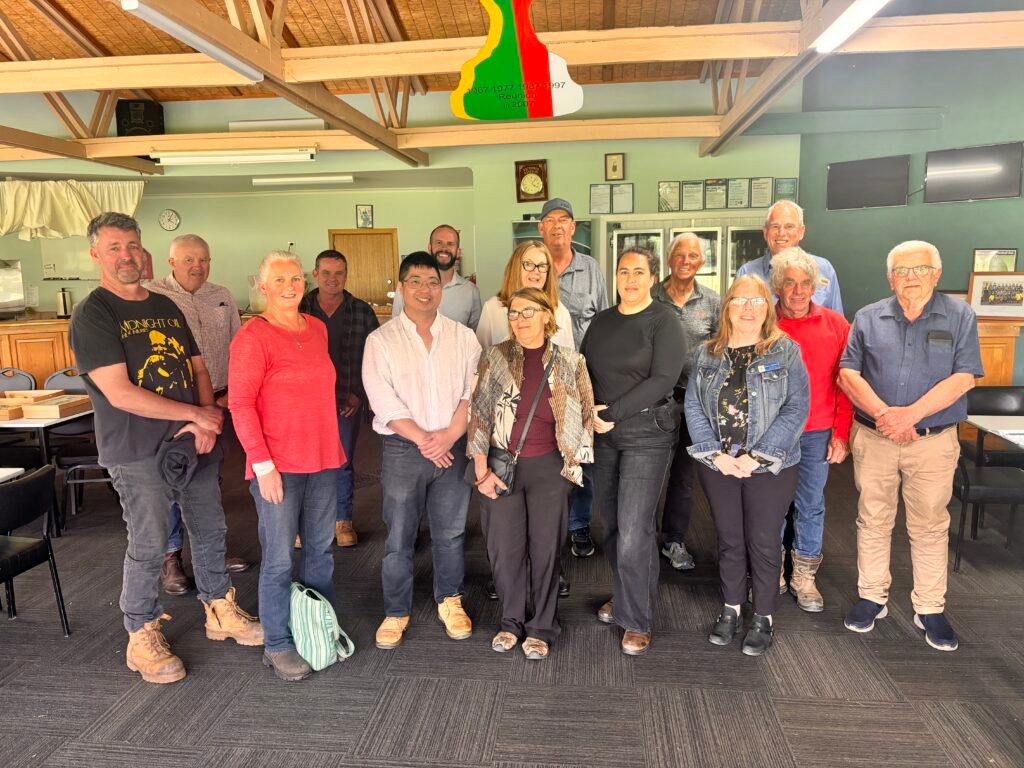
The Future of Orbost and District (FoOD) participants
News, Building, Business Members, Education, Government regulations, Growers, Manufacturers, Newsletter, Past Events, Research

Orbost is well positioned to play an important role in the Gippsland region’s emerging industrial hemp industry.

In November 2025, the Future of Orbost & District (FoOD) project brought together farmers, industry experts, and government representatives for a two-day forum exploring whether industrial hemp could breathe new economic life into the East Gippsland region, an area still adjusting to the end of native timber harvesting. The conclusion was optimistic: Orbost presents a genuinely compelling case for becoming Australia’s first dedicated industrial hemp processing hub. The forum identified a unique combination of factors working in Orbost’s favour. The region has suitable land and climate for growing hemp, a strong agricultural community, existing seed expertise through Gippsland Seed Services, and,  critically,  a collection of mothballed timber mill sites that could be repurposed as processing facilities at a fraction of the cost of purpose-built infrastructure. Parkside Mill emerged as the standout candidate for a decorticator processing line, with Nowa Nowa well suited to bale storage and complementary processing. Reaching a viable scale of around 1,000 hectares over time was flagged as the key long-term target. On the market side, the forum explored several product streams: building materials made from hemp hurd (currently commanding prices above $2,000/tonne), bast fibre for export textiles, hemp-based pallets (with demand potentially supporting 800–1,200 hectares of crop alone), board products, and food grain. Each opportunity carries its own challenges, from immature building codes and a shortage of trained hemp builders, to the need for clear offtake agreements before major capital can be committed. The path forward is collaborative and staged. Priority next steps include engaging with mill site owners, developing a business model canvas and cash flow projections, running further crop trials, and building connections with state and national industry bodies. The forum also sparked some creative longer-term ideas, including whether synthetic biology could assist hemp retting, and whether local sea urchin shells could supply lime as a natural building binder. Food & Fibre Gippsland is also emerging as the key regional umbrella organisation supporting innovation ecosystem development, whole-of-value-chain activation, and and contributing to a stronger unified national voice for the industry.   The energy and expertise for the project suggest that if any regional community can make an industrial hemp hub work, Orbost is well placed to be first. Watch the video here –Industrial Hemp and the future of Orbost & District Full report below from the 2025 forum below: Photo courtesy of Nicola Watts

Scroll to Top