
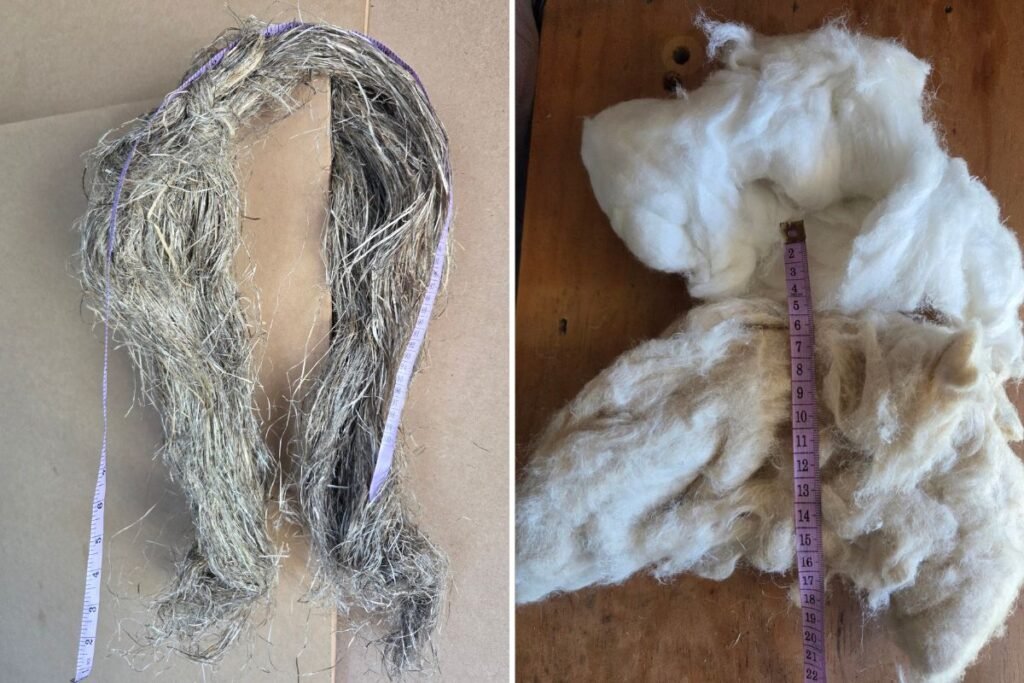
Hemp Fibre – China & Australia
Colins story of his visit to China and the news about hemp fiber.
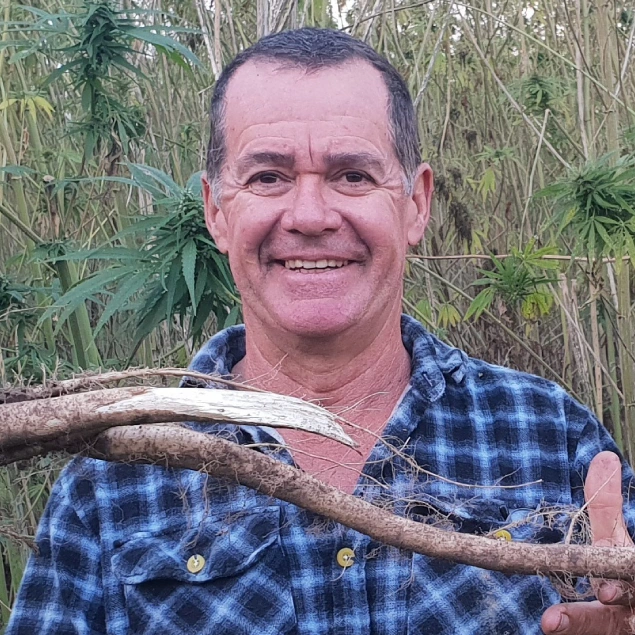
Colins story of his visit to China and the news about hemp fiber.
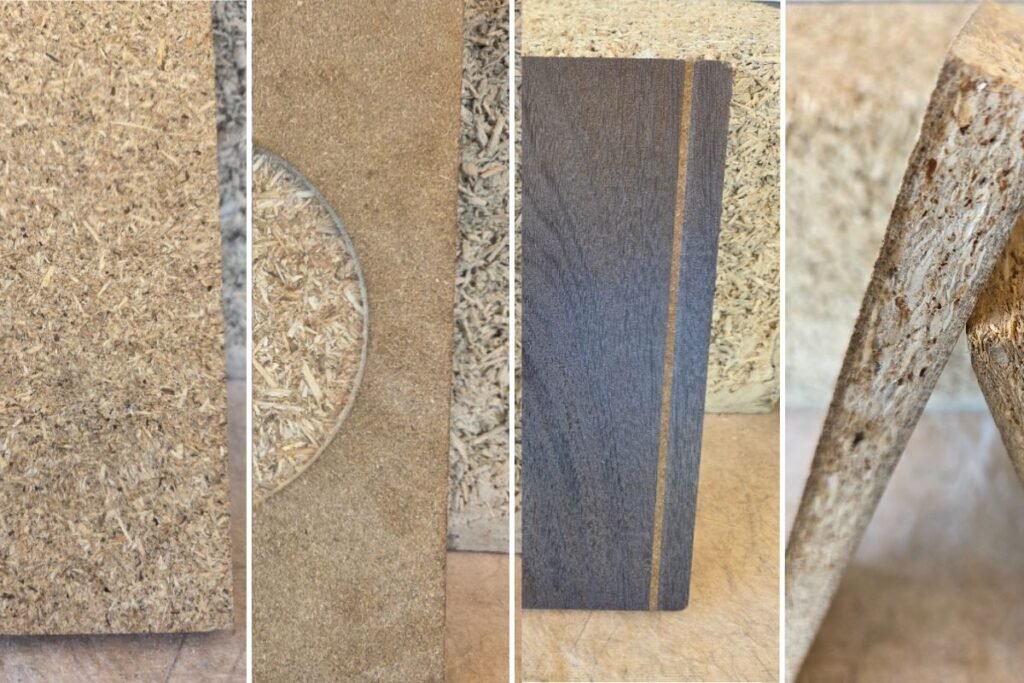
Hempwood Samples are now close to completing testing and, over the next year, should be ready to move into production
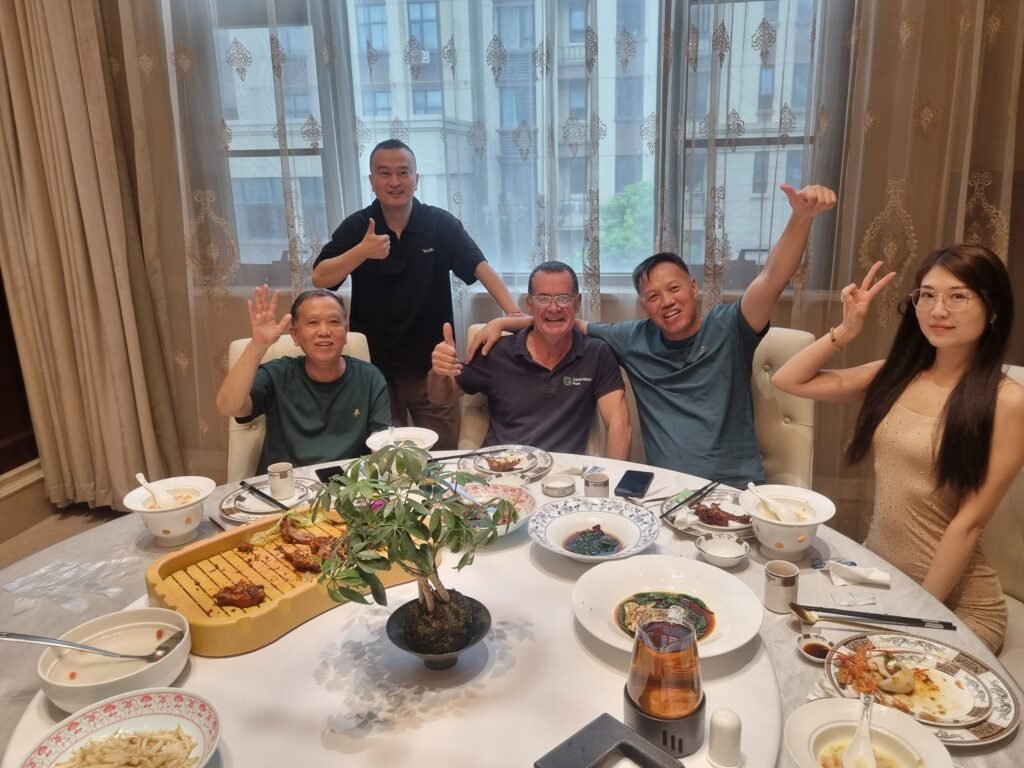
By Colin Steddy Hemp Inside Pty Ltd | iHemp NSW Executive Member In late July 2025, I headed to China to reconnect with key partners and explore the latest in fiber, plastic, and board manufacturing technology for hemp. The trip was fast-paced, full of factory visits, long train rides, and great conversations over tea — but most of all, it reaffirmed just how fast hemp innovation is moving in China. Shanghai: Fiber Processing Reimagined After leaving Vacy early on July 30, I arrived in Shanghai late that night where my long-time contact, Victor, met me at the airport. We eventually found his car after a short adventure in the car park and drove three hours to the hotel, pulling in around 3:40 a.m. Despite little sleep, I was keen to see what awaited the next day. At the factory, I was impressed by the level of refinement in their fiber-processing systems. The new long-fiber line, recently upgraded, now requires only two operators instead of nine. It runs cleanly without the need for an underground pit — a big saving — and automatically bales the finished fiber. The new setup handles stalks under 5 mm thick, blowing the Hurd cleanly into a separate bin. Equally impressive was the short-fiber line, featuring a redesigned drum that treats the fiber gently, maintaining its length and softness. The integrated dust-extraction system can service both lines simultaneously, allowing any short fiber from the long-line process to be redirected — meaning virtually no waste. Although each line currently outputs about 300 kg of fiber per hour (roughly one ton combined), the modular design means five units could outperform a five-tons-per-hour European system at a fraction of the cost. That evening over supper, I reconnected with Eric, an interpreter from a previous trip, and his colleague Tim, a Dutch-born Chinese fiber specialist with a distinctly Australian sense of humor. Over coffee, we discussed how Australian hemp fiber could fit China’s high-volume textile markets. China’s grading system is still largely based on experience — “look and feel” rather than numbers — but their eye for quality is sharp. The conversation reminded me how important hands-on understanding remains in this trade. Jinan: Natural Fiber Plastics The next leg took me north by high-speed rail to Jinan. Steven from GW Plastics met me and introduced me to their automated molding operation — one worker producing a pallet of parts every three minutes. Their latest trials blend up to 80 percent natural fiber with plastic. The result is stronger, lighter, and less brittle — an ideal direction for sustainable materials. I immediately thought of potential applications for hemp, from injection-molded components to structural profiles. One idea we discussed was a “plastic rebar” or concrete straightener — using waste plastic and hemp stalks together. It’s the kind of circular solution that could really take off as green construction grows. Cement Boards and Bio-Composites From there I met Kevin, who manufactures cement board machinery used around the world. His plant featured two systems: a 100-metre heat-based line that requires glue, and a 50-metre cold-press version that doesn’t — fully automated, simple to run, and versatile. Boards ranged from thin 2 mm sheets up to 120 mm sandwich panels. This technology, combined with hemp fiber, could produce strong, lightweight, and toxin-free panels — exactly the kind of building materials the market is demanding. Every machine component met European electrical standards, meaning compatibility with Australian regulations would be straightforward. That evening, I checked into a modest hotel and ventured out for dinner, finding that everywhere I went, WeChat was the key to doing business. It’s more than just messaging; it’s the backbone of communication and payments in China. It’s clear I’ll need to set up a proper account before my next trip. Panjin: Reed and Hemp Board Futures A few days later, after a long standing-room-only train ride, I arrived in Panjin to meet Mr. Zhang, who runs a major reed-board manufacturing facility. Liz, an excellent interpreter, joined us for the tour. The factory processes 30–35,000 tons of reeds annually — material harvested from local wetlands and stored in large bales much like hay or hemp. The plant was spotless, with no visible dust and a sweet smell from the natural lignin binding the boards. Workers weren’t masked or suited up — the process itself is that clean. Over lunch, we discussed the potential for hemp as a feedstock. Mr. Zhang already had trialed hemp board and was enthusiastic about the results. He suggested partnering with Hemp Inside to test Australian hemp in his system, with the possibility of building a dedicated mill in Australia by 2027 if the economics and market align. The reed and hemp boards are almost indistinguishable by sight or touch — but hemp may prove to be the stronger and more sustainable fiber. Zhangpu: Wrapping Up and Looking Forward My final stop was Zhangpu, where I reunited with Mr. Xu — a long-term collaborator and friend. Over several days we shared meals, visited his warehouse, inspected a salt-tolerant kenaf trial, and talked late into the evenings about hemp’s future. Xu’s knowledge and network across China’s hemp and bio composite sectors continue to open new doors for collaboration. Our discussions confirmed that China is pivoting rapidly toward non-toxic, bio-based materials. Whether in fiber decortication, plastic composites, or natural boards, every manufacturer I met was seeking cleaner, simpler processes — and hemp fits perfectly into that vision. Reflections In just under two weeks, I saw firsthand how China’s manufacturing ecosystem continues to adapt and innovate around natural materials. The common thread across all these meetings was efficiency, integration, and sustainability — each factory taking steps to reduce labor, waste, and reliance on synthetic binders. For Hemp Inside and for Australia’s growing hemp industry, the opportunities are clear. By connecting our clean, high-quality raw materials with China’s processing technology and manufacturing scale, we can accelerate the development of hemp products that are competitive, sustainable, and commercially ready. As I landed back in Sydney on August 11, tired but
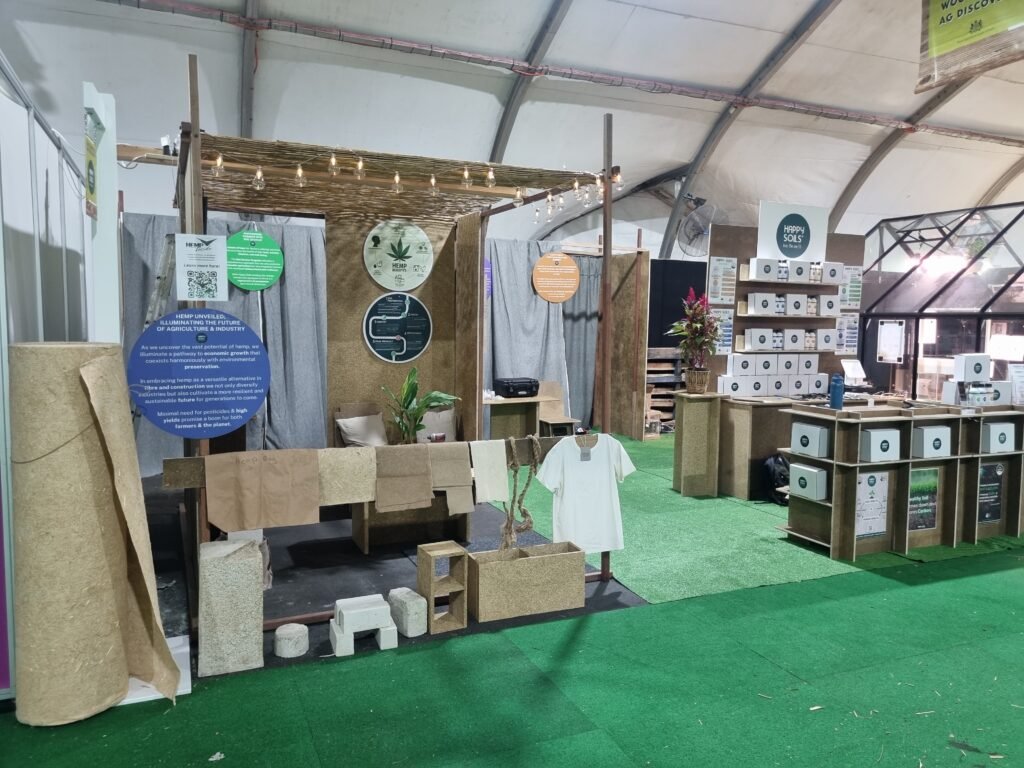
By Colin Steddy, Hemp Inside This year, I had the great privilege of joining Happy Soils (Andrew Meseha), Hexcore, and Why Not Consulting at the Sydney Royal Easter Show, thanks to an invitation from Duncan Kendall and the team at the Woolworths Discovery Centre. We bumped in on April 9, ready for gates to open on the 10th, and the energy was electric from day one — in fact, it was the biggest opening-day crowd in the show’s history. The Discovery Dome display stood out for all the right reasons. The entire fit-out — walls, tables, chairs, and cabinets — was crafted from ply board and furniture made by Hexcore using hemp materials. Hemp Gallery supplied beautiful hemp-made items, and I brought along hempcrete bricks, weed matting, samples of hurd and fibre, and hemp seed oil for sale. It was an honour to represent Hemp Inside and the broader Australian hemp industry. Public interest in hemp was strong and genuine. People came eager to share what they knew and to learn more — from curious newcomers to returning visitors tracking industry progress. Many asked, “Can I grow hemp on my land?” My answer was consistent: “We need to develop more markets and attract more investment to grow demand. Once that happens, we’ll be looking for more growers.” Andrew, Anastasia, their baby, and I were there every day — and yes, standing and talking non-stop for nearly two weeks was exhausting! But the support we received made it worthwhile. Visitors were enthusiastic, firemen stopped to see our display (including a video of the Hexcore house being tested in fire conditions), and Happy Soils customers shared encouraging results and plans to expand their use of the products. Media coverage? Disappointingly, not a single photo. But meaningful conversations made up for it — including promising follow-ups and exciting developments in the pipeline for Hexcore. I also had a valuable hour-long call with the NSW Department of Primary Industries, where I shared views on key obstacles holding back the industry: We must collaborate to build a strong, sustainable industry. The shift from the Office of Drug Control to the Department of Agriculture would unlock growth. It would create the policy certainty needed to attract serious investment. Right now, the perception that regulations could change overnight by the narcotics division scares off potential backers. Encouragingly, DPI is calling for industry submissions to help shape a stronger future. I urge everyone to contribute. One of the best compliments came from other exhibitors, who said the energy from our display was inspiring. Andrew’s love of music and fun made for a lively space — we even had a few dance moments with the crowd. The positivity was contagious. We bumped out on April 23 — a long stint on our feet, but a truly worthwhile experience. Big thanks to the Royal Agricultural Society, Duncan Kendall and his team, and our amazing crew: Andrew, Anastasia, Why Not Consulting, and Happy Soils. Let’s keep pushing forward. Cheers,Colin SteddyHemp Inside Hemp at the 2025 Sydney Royal Easter Show Gallery
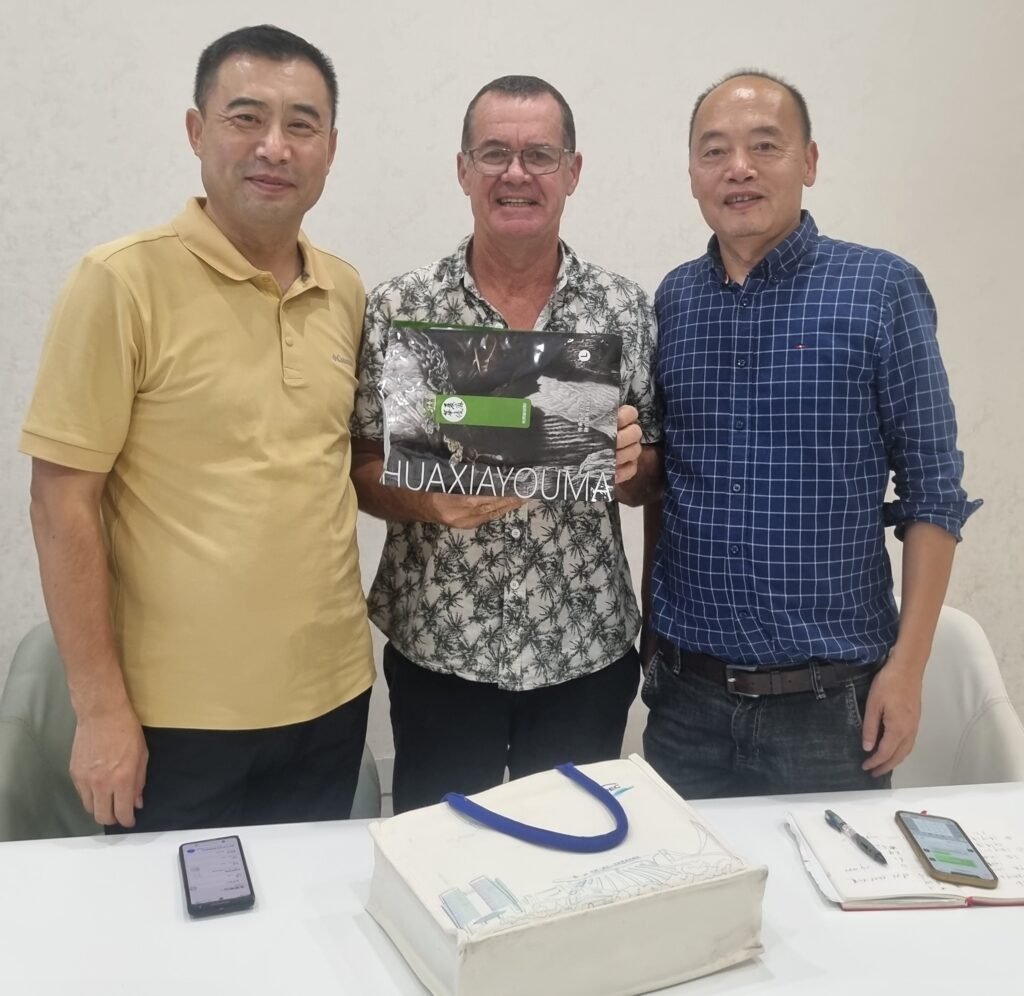
My Amazing Visit to China 4 -16 October 2024 By Colin Steddy – Hemp Inside Access to seed I flew to Xiamen and was driven to Zhangpu, to catchup with Mr Xu and his father Rong Long from ZHANGPU ZHONGLONG KENAF SEEDS CO, LTD. I first imported seed from Xu in 2017 after my visit in 2016 and have kept close contact since. We have formed a strong relationship. Working together with ideas on how to do more than just seed. China can now get permits to grow in most parts of China. The THC must be below 0.35 unless you have a breeding licence. Mr Xu has a breeding program with a government centre in China, paid for by Xu, looking at hybrid hemp seed production. For me, it was an interesting site visit because: we are talking new varieties of hemp the breeding program is looking at 4 tonnes per ha, so hemp can compete with soy. Currently there is a world shortage of hemp seed for food and planting seed. I am hearing reports of low yields and low germination across the world. ZHANGPU ZHONGLONG KENAF SEEDS CO, LTD has potential to produce eight hundred tonnes of planting seed for export around the world. Hunter Valley Hemp Seed & Grain, a new enterprise with Bob and Susan Doyle and myself. We will be growing the Chinese varieties in early 2025 for planting in the 2025 September season. We will also export. Please contact me for information. Details below. Research needed New research needs to be done on the flowering and pollen drop with dioicous varieties. With the findings that seed from around the world is having issues with low seed germination and bad vigour. We thought this was to do with heat and temperature; there is more to learn about the flowering times especially in diecious varieties. Mr Xu and I have been working on a seed testing protocol. When male pollen falls, are the females ready and what are the weather conditions? Is it cold and wet are the day length short? This looks like the results at Hamilton in Victoria for the long season varieties. Because of cold short days there was little seed produced exactly as I have been suggesting. Long season seed crops should be grown in the north then moved south for fibre and biomass production. Could this also be a result of germination rates falling quickly and low plant vigour? We are looking for the collection of flowering and weather conditions in relation to germination rate drop and low seed vigour. I would like our researchers to look at this. Exploring seed testing protocols We are looking at building new seed testing protocols on how to monitor what might happen with seed longevity. The hemp industry in Australia needs to keep all data from planting and fertiliser inputs and timing. What triggers THC spikes? Why do seeds loose germination? Fibre quality, planting density (plants per m2) and fertilise can have an enormous impact. Let alone how the machinery and retting occur. Know the spec from the end user? In the north of Australia long season varieties continually get higher grain yields. South European, and some Australian varieties do better than in the hot north. How you move the varieties in latitude will give you a different outcome, seed size, yield, or biomass. This also happens in China just south to north. See AgriFutures hemp trial results from all sites in Australia. The one thing that has not been calculated in the result is grain yield/price and biomass price. As a grower we need to know the total income from a crop. You can work this out yourself. Find the yields of biomass and seed and give them a value on current market. I work on $2.65 for grain and $3.50 for biomass as the stalk is less value than just a biomass crop. Currently in China there is a large demand for hemp fibre and China is sourcing fibre from every corner of the world. Is your fibre going into textiles, insulation, weed matting or paper? Each end product requires different specs and price. How much hurd can be in the fibre? Or is it a whole stalk product? My visit to a textile mill I visited a textile mill in Shanghai (CPL) that want to purchase textile fibre from Australia; the mill makes clothing, with hemp blended with other fibres. Lisa was my interpreter and looked after me. Their demand is growing, and they could be looking for up to 10,000 tonnes! Once again, I was treated like a king and taken to dinner and sightseeing to Xitang, an old Chinese town. Usually it is very crowed, but it was raining and was thankfully incredibly quiet. The market was a maze of thin walkways with shops selling food and a vast array of items big and small. It was very beautiful. This mill has a contact living in South Australia. His name is Yao Yang, and he kindly organised my visit. I wanted to see the fibre quality they need so I can help Australian growers and processors meet the specifications. Today there is a massive shortage of textile hemp fibre – how long it will last, we do not know. I introduced them to Mr Xu, my friend in Zhangpu. Unlike Australia, the industry in China is large and they were not familiar with each other. Along with Lisa, my interpreter, Mr Chunlei Hou and Professor Fan, a polymer academic took me to lunch. They were very warm and friendly. Before we drove to the mill, we discussed growing the right fibre, retting and what spec they need. They have some samples from Australia that need to have less hurd – below 10% is ok. The only mill I know that is close to their spec is Gary Rogers in WA and Bob and Susan Doyles’ that needs a few modifications to clean the fibre and the dust extraction.