Building

Hemp building and construction construction, including hempcrete, blocks, panels, design and build services. Checkout hempbuilding.au

Building, News, Newsletter

Building with Hemp, Building Community: New Zealand Workshops Strengthen Local Skills

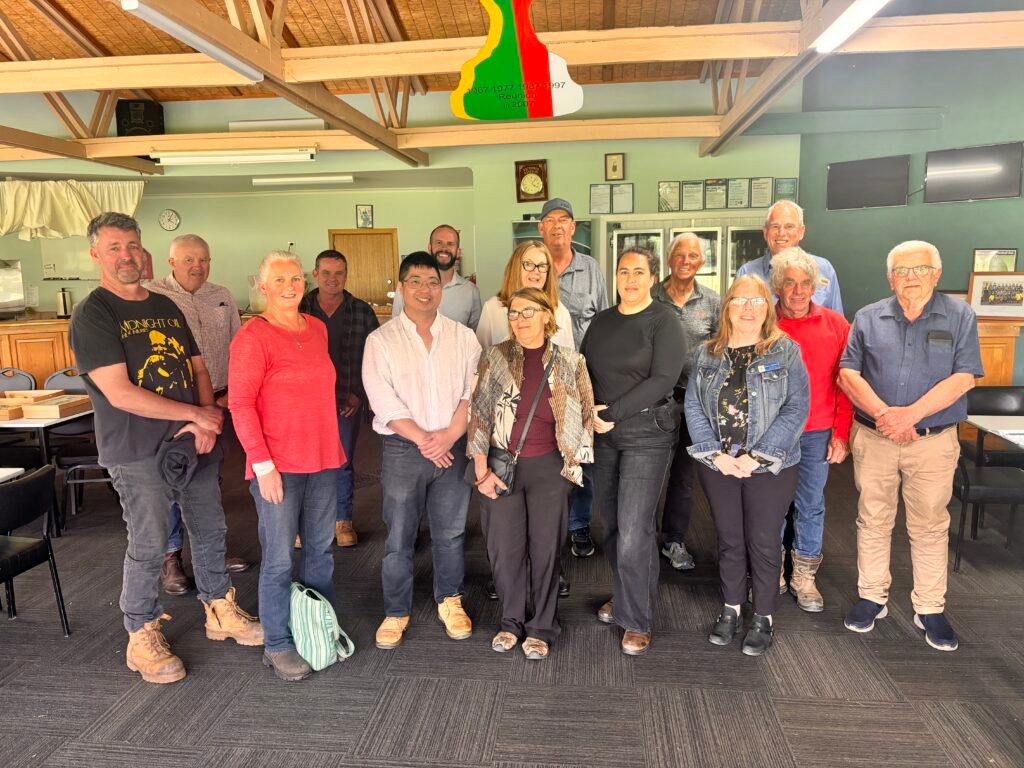
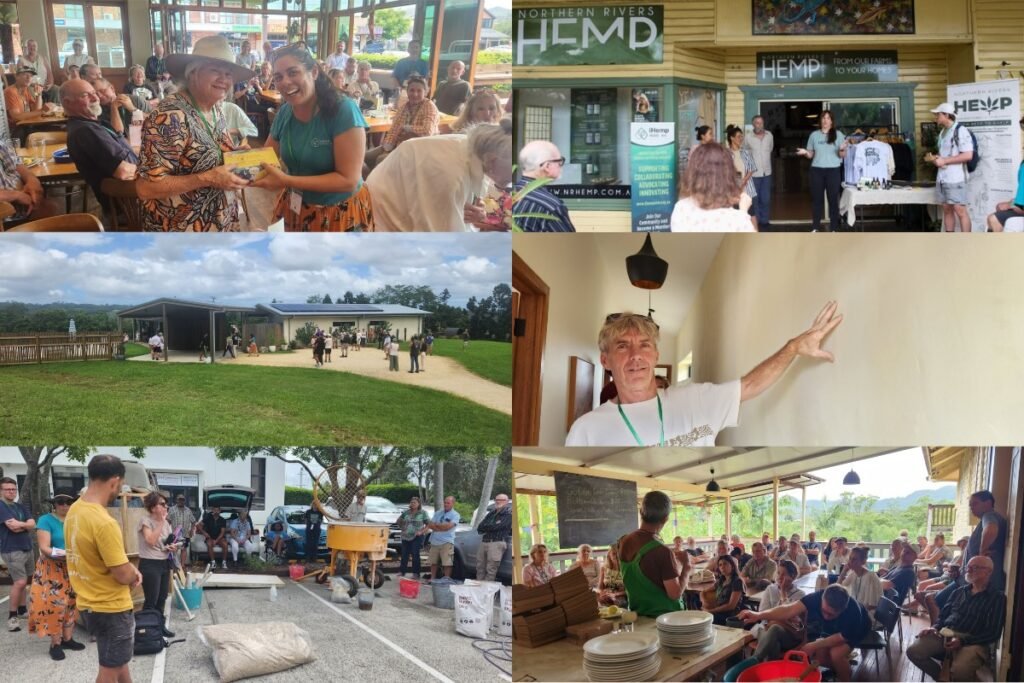
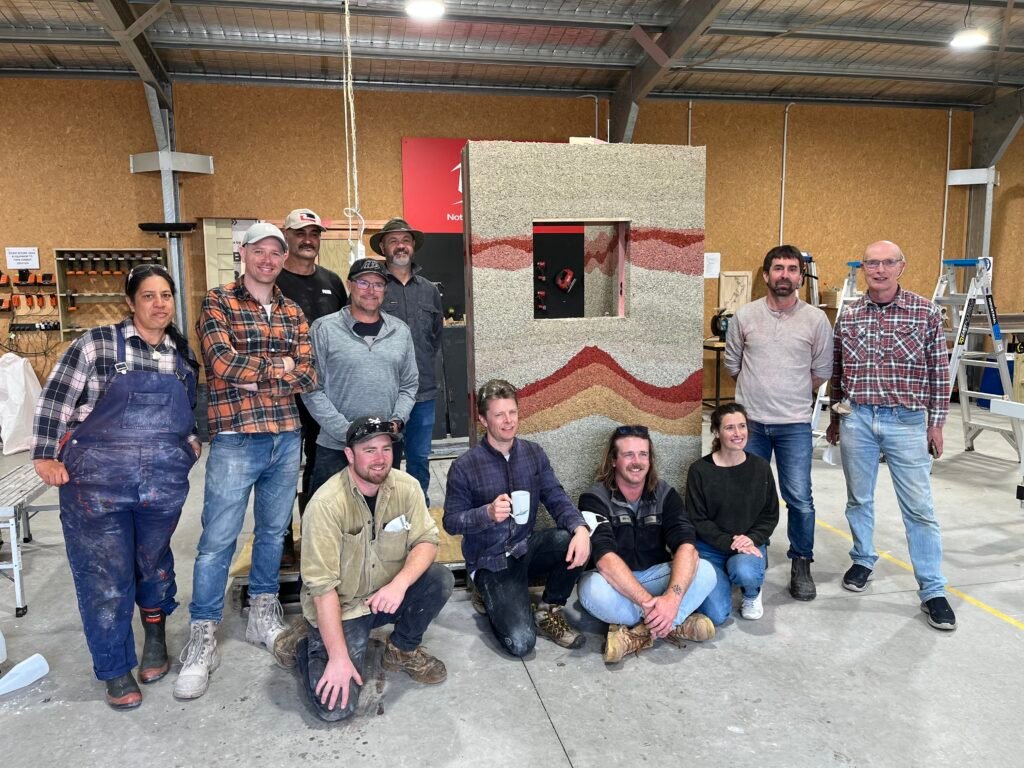
By Klara Marosszeky | Managing Director Australian Hemp Masonry Company Over the past few months, we’ve been working with Hemp Central in Wanaka on the South Island of New Zealand and Venture Taranaki on the North Island to deliver training for hemp builders, owner builders and community. It’s the second practical workshop organised by Tanya Simmonds in Wanaka in the past 2 years and the Taranaki workshops have been the culmination of months of conversations following various Hemp industry events in Australia over the last year and a half. We’d trained a few builders from New Zealand who’ve come over to Australia for workshops and supplied a few houses over there in the past, but at that time there was no suitable building-grade hurd available in New Zealand. That’s changed dramatically over the past few years. With farming becoming more regionalised, Ashford processors now in both locations and with more builders getting trained, a small solid hemp building industry is being established. Given our long-term interest in supporting capability in Indigenous communities, it’s been very rewarding to work alongside Venture Taranaki as they build the capacity in their community to address their social housing needs. Community members from other neighbouring Maori groups visited and attended the Taranaki workshops. We’ll continue to support their emerging trainers until they are well underway, and our input is no longer needed. “We have the same interest in building capability in Aboriginal communities and hope some similar opportunities emerge,” says Klara.
Building, News, Newsletter

Rapid Build Showcases the Power of Hemp — Otetto’s Living Canvas Panels Installed in Just 4 Days

Northern Rivers, NSW — Innovative hemp construction company Otetto has successfully completed the installation of its Living Canvas prefabricated hempcrete panel system on a new home in the Northern Rivers region — with the entire structure assembled in just four days. The project features Otetto’s house design, the Mulloway, currently the company’s most adaptable and flexible model, designed to suit a wide range of sites, climates, and lifestyles. This milestone demonstrates how prefabricated hempcrete systems can dramatically accelerate build times while maintaining outstanding thermal, acoustic, and environmental performance. The Living Canvas panels were designed and manufactured off-site, then craned into place with precision — resulting in a clean, efficient, and low-impact construction process. “This build really shows what’s possible when innovation, sustainability, and good design come together,” said Harrison Marsh from Otetto. “To see a full home structure completed within four days using Australian-grown hemp materials is a big step forward for the industry.” The success of the project highlights the growing momentum behind industrial hemp as a practical, sustainable building material — one that supports regional industries, reduces carbon emissions, and promotes healthier living environments. For more information about Otetto’s Living Canvas system and the Mulloway design, visit otetto.au

Building, Education, News, Newsletter, Research

Exploring the Future of Timber at Parliament House

By Harrison Marsh | Otetto Mid-October, we were proud to attend the Sustainable Timber Solutions Parliamentary Showcase at Parliament House, hosted by the Parliamentary Friends of Forests, Forest Alliance NSW, and WWF-Australia. The evening brought together leaders from across the timber, construction, and sustainable materials industries to explore viable alternatives to native forest logging — a practice increasingly under scrutiny for its environmental and social impacts. It was a strong turnout, with industry professionals, policymakers, and innovators all engaging in meaningful discussions about the next chapter of timber in Australia. Opening remarks from Dermot O’Gorman, CEO of WWF-Australia, and Justin Field from Forest Alliance NSW set the tone for the night — highlighting the urgent need to protect our remaining native forests and accelerate the shift toward sustainable, regenerative materials. Displays from House of Bamboo, Hemp Inside, Bamboo Society Australia, Australian Hemp Council, iHempNSW, and BVN Architecture showcased how materials like hemp, bamboo, and engineered wood products are already reshaping what’s possible in the built environment. For us at Otetto, it was an excellent opportunity to connect with like-minded innovators and explore how these materials can work together to fill the gaps. Finding Balance, Not Replacements While hemp and bamboo offer impressive performance and sustainability credentials, they are not a like-for-like replacement for hardwoods — either in performance or aesthetics. Trying to directly replace native timber with these materials is a bit like trying to make vegetarian food look and taste exactly like meat. Each has its own unique strengths and characteristics, and part of the challenge is learning how to design and build in a way that embraces those differences rather than mimicking the past. Supporting Industry Transition Another key takeaway from the event was the recognition that the transition away from native forest logging is not just an environmental issue — it’s also a people issue. The emerging hemp and bamboo industries can play a vital role in providing new opportunities for workers and regional communities historically tied to forestry. These new industries can offer sustainable, locally grown alternatives while supporting a fair and considered transition for those affected by industry change. The Importance of Responsible Land Management If a ban on native forest logging goes ahead, it’s essential that the land is managed correctly. Protecting forests is only part of the equation — how that land is maintained will determine the long-term success of the policy. Poor management practices, particularly around fire mitigation, have historically caused more damage to native habitats than sustainable, selective forestry operations. As highlighted by many within the agricultural and environmental sectors, including land managers with decades of experience, government agencies have often struggled to properly maintain the land they already oversee. Without proactive management, the risk of catastrophic fire events increases — ultimately threatening the very ecosystems these policies are designed to protect. At Otetto, we recognise this is a complex and sensitive space. Sustainable forestry and conservation can coexist if managed correctly. Regeneration, selective harvesting, and habitat corridor planting can all form part of a balanced approach that supports both environmental and economic outcomes. It’s not about one side being right and the other wrong — it’s about finding common ground where biodiversity is protected, and communities and industries can continue to thrive sustainably. Education and Collaboration As these sectors continue to grow, education will be critical. Suppliers, specifiers, builders, and end users all need better access to knowledge and training on how to implement these materials effectively. Understanding how to design, engineer, and build with hemp and bamboo will be key to ensuring they take root in the mainstream construction landscape. The event also saw encouraging interest from attending politicians, signalling growing recognition at the policy level of the potential these materials hold. This kind of support will be essential to helping the industry mature and scale responsibly. Looking Ahead The realities of native forest logging — as highlighted in recent reports by WWF-Australia — show why finding alternatives is so important. But as we saw at Parliament House, the solutions are already taking shape. With collaboration, education, and open-minded design thinking, we can move toward a future where sustainable materials like hemp and bamboo play a major role in Australia’s construction story. At Otetto, we’re proud to be part of that conversation and look forward to continuing to work with partners across the industry to build better, cleaner, and smarter. Photos courtesy of Jeremy Thomas (Hemp Building Directory) and Colin Steddy (Hemp Inside).

Accessories, Building, Clothing, Food Products, Manufacturers, News, Newsletter, Processors

China Visit: Exploring Fiber, Plastics and Board Innovation for Hemp’s Next Leap

By Colin Steddy Hemp Inside Pty Ltd | iHemp NSW Executive Member In late July 2025, I headed to China to reconnect with key partners and explore the latest in fiber, plastic, and board manufacturing technology for hemp. The trip was fast-paced, full of factory visits, long train rides, and great conversations over tea — but most of all, it reaffirmed just how fast hemp innovation is moving in China. Shanghai: Fiber Processing Reimagined After leaving Vacy early on July 30, I arrived in Shanghai late that night where my long-time contact, Victor, met me at the airport. We eventually found his car after a short adventure in the car park and drove three hours to the hotel, pulling in around 3:40 a.m. Despite little sleep, I was keen to see what awaited the next day. At the factory, I was impressed by the level of refinement in their fiber-processing systems. The new long-fiber line, recently upgraded, now requires only two operators instead of nine. It runs cleanly without the need for an underground pit — a big saving — and automatically bales the finished fiber. The new setup handles stalks under 5 mm thick, blowing the Hurd cleanly into a separate bin. Equally impressive was the short-fiber line, featuring a redesigned drum that treats the fiber gently, maintaining its length and softness. The integrated dust-extraction system can service both lines simultaneously, allowing any short fiber from the long-line process to be redirected — meaning virtually no waste. Although each line currently outputs about 300 kg of fiber per hour (roughly one ton combined), the modular design means five units could outperform a five-tons-per-hour European system at a fraction of the cost. That evening over supper, I reconnected with Eric, an interpreter from a previous trip, and his colleague Tim, a Dutch-born Chinese fiber specialist with a distinctly Australian sense of humor. Over coffee, we discussed how Australian hemp fiber could fit China’s high-volume textile markets. China’s grading system is still largely based on experience — “look and feel” rather than numbers — but their eye for quality is sharp. The conversation reminded me how important hands-on understanding remains in this trade. Jinan: Natural Fiber Plastics The next leg took me north by high-speed rail to Jinan. Steven from GW Plastics met me and introduced me to their automated molding operation — one worker producing a pallet of parts every three minutes.   Their latest trials blend up to 80 percent natural fiber with plastic. The result is stronger, lighter, and less brittle — an ideal direction for sustainable materials. I immediately thought of potential applications for hemp, from injection-molded components to structural profiles. One idea we discussed was a “plastic rebar” or concrete straightener — using waste plastic and hemp stalks together. It’s the kind of circular solution that could really take off as green construction grows. Cement Boards and Bio-Composites From there I met Kevin, who manufactures cement board machinery used around the world. His plant featured two systems: a 100-metre heat-based line that requires glue, and a 50-metre cold-press version that doesn’t — fully automated, simple to run, and versatile. Boards ranged from thin 2 mm sheets up to 120 mm sandwich panels. This technology, combined with hemp fiber, could produce strong, lightweight, and toxin-free panels — exactly the kind of building materials the market is demanding. Every machine component met European electrical standards, meaning compatibility with Australian regulations would be straightforward. That evening, I checked into a modest hotel and ventured out for dinner, finding that everywhere I went, WeChat was the key to doing business. It’s more than just messaging; it’s the backbone of communication and payments in China. It’s clear I’ll need to set up a proper account before my next trip. Panjin: Reed and Hemp Board Futures A few days later, after a long standing-room-only train ride, I arrived in Panjin to meet Mr. Zhang, who runs a major reed-board manufacturing facility. Liz, an excellent interpreter, joined us for the tour. The factory processes 30–35,000 tons of reeds annually — material harvested from local wetlands and stored in large bales much like hay or hemp. The plant was spotless, with no visible dust and a sweet smell from the natural lignin binding the boards. Workers weren’t masked or suited up — the process itself is that clean. Over lunch, we discussed the potential for hemp as a feedstock. Mr. Zhang already had trialed hemp board and was enthusiastic about the results. He suggested partnering with Hemp Inside to test Australian hemp in his system, with the possibility of building a dedicated mill in Australia by 2027 if the economics and market align. The reed and hemp boards are almost indistinguishable by sight or touch — but hemp may prove to be the stronger and more sustainable fiber. Zhangpu: Wrapping Up and Looking Forward My final stop was Zhangpu, where I reunited with Mr. Xu — a long-term collaborator and friend. Over several days we shared meals, visited his warehouse, inspected a salt-tolerant kenaf trial, and talked late into the evenings about hemp’s future. Xu’s knowledge and network across China’s hemp and bio composite sectors continue to open new doors for collaboration. Our discussions confirmed that China is pivoting rapidly toward non-toxic, bio-based materials. Whether in fiber decortication, plastic composites, or natural boards, every manufacturer I met was seeking cleaner, simpler processes — and hemp fits perfectly into that vision. Reflections In just under two weeks, I saw firsthand how China’s manufacturing ecosystem continues to adapt and innovate around natural materials. The common thread across all these meetings was efficiency, integration, and sustainability — each factory taking steps to reduce labor, waste, and reliance on synthetic binders. For Hemp Inside and for Australia’s growing hemp industry, the opportunities are clear. By connecting our clean, high-quality raw materials with China’s processing technology and manufacturing scale, we can accelerate the development of hemp products that are competitive, sustainable, and commercially ready. As I landed back in Sydney on August 11, tired but

Building, News, Newsletter

On the road to a hemp home!

By Janet Price Hemp Farmer | Treasurer, iHemp NSW Part 1 – The beginnings Have you ever viewed ‘Grand Designs’ and mused over why so many end up over budget? Most of us start out thinking we can save money by project managing, doing some things ourselves, or even being an Owner Builder! Add to this daring to be the first to do anything different in the building game… and a woman…and an elderly one at that! I returned home in Yr 2000 to care for my ageing dad, who like most farmers didn’t want to leave to go into some place in town. As was the tradition, my brothers were given the option to buy, eventually turning down the valuated price. I had always yearned to return home after living in sixteen homes over twenty-four years as an Australian Defence family, and this was my turn to be still. The original mud home, built by my dad, was looking tired. A ticket to the Home Show and the opportunity to hear about the benefits of hemp from Dick Clarke led to Dick’s clever design. Woohoo; Dick’s business was carbon-neutral – he couldn’t justify coming over the mountains to look at my current home; and finding a Certifier who was brave enough to approve a hemp home; and a builder who even knew what hemp was, was some of the initial headaches… How was I going to build this beautiful hemp home? To be continued…

Building, News, Newsletter

Rethinking the Future of Australian Homes with Prefabricated Hemp SIPs

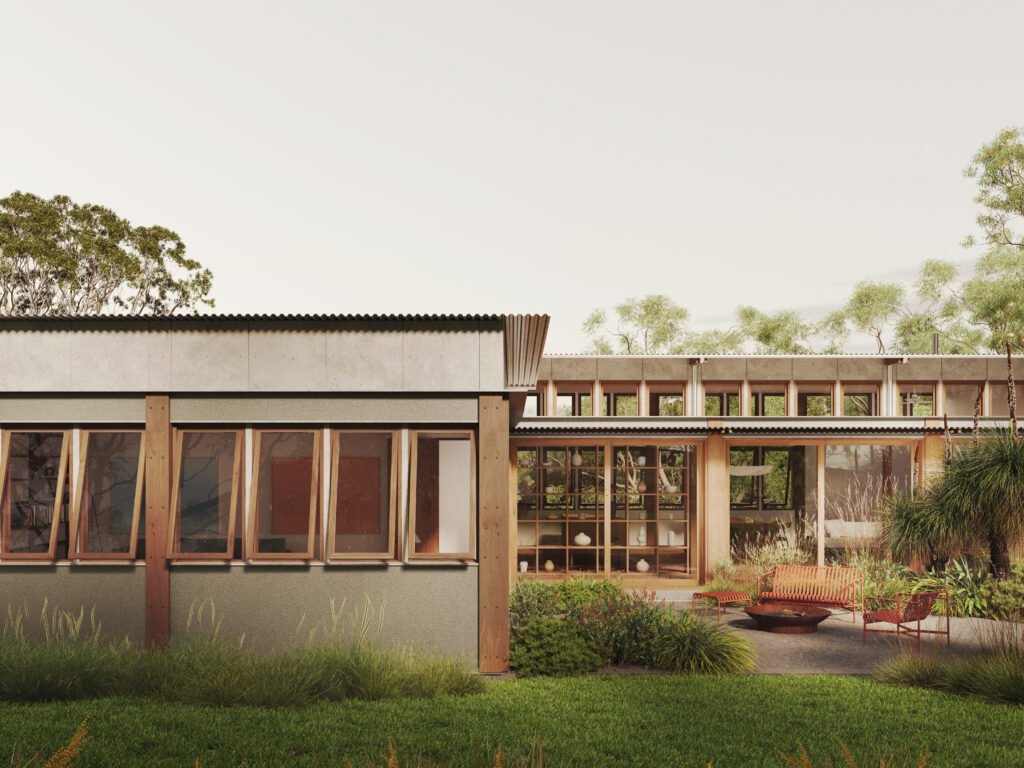
Written by Amanda Marsh | Co-Founder, Otetto® August 2025 As someone deeply invested in creating sustainable, high-performing homes, I’ve become increasingly aware of a hard truth: the built environment accounts for nearly 40% of global carbon emissions. It’s clear that if we want to create a climate-resilient future, the way we design and construct our homes must change—and fast. That’s where Otetto comes in. At Otetto®, we’re proud to be pioneering the use of hemp in residential construction across Australia. Our mission is to reimagine how homes are designed, built, and lived in—by making healthy, climate-resilient housing more accessible and achievable for all Australians. We’ve developed Living Canvas®, a prefabricated hempcrete wall system designed to integrate regenerative materials into everyday building projects. As builders and designers ourselves, we knew the barriers—hemp has often been seen as niche, labour-intensive, or experimental. Our goal was to remove those barriers and prove that hemp not only belongs in the mainstream but can outperform traditional materials in comfort, health, and sustainability. Fast-growing, fire-resistant, and naturally insulative, hemp requires no synthetic inputs and supports the creation of healthier, more energy-efficient homes. But for us, it’s not just about the material—it’s about the system. We’ve developed a modular approach that allows for faster delivery, greater precision, and significantly less waste. This system empowers architects, builders, and homeowners to confidently incorporate hemp into their projects without compromising on design or performance. Our Living Canvas Structural Insulated Panels (SIPs) are made from locally grown Australian hemp and include wall, floor, and roof cassettes—offering a full building envelope that regulates heat and moisture, while also meeting high bushfire performance ratings and achieving a 7-star NatHERS energy rating. Looking beyond materials, we’re also passionate about changing how Australians think about homebuilding. We’ve launched two architecturally designed off-the-plan homes—Corymbia and Mulloway—to showcase what’s possible when you pair regenerative materials with thoughtful design. Created in collaboration with award-winning architects, these homes reflect our belief that beautiful, high-performance homes can also be accessible, sustainable, and built for the future. Mulloway House Renders: Choi Render Mulloway House Renders: Choi Render (Living Canvas SIPs): Photo by: Gary Parker (Living Canvas SIPs- Crane): Photo by: Otetto

Building, News

Hemp Building Directory

Thinking about building with hemp? A good place to start is the Hemp Building Directory! Launched in July 2023 as a social enterprise, the Hemp Building Directory (HBD) connects people keen to build with hemp with the professionals who can make it happen. From designers and suppliers to builders and installers. Whether you’re looking to live in a hempcrete home, design one, or help build it, HBD is your go-to resource. Founded by tech savvy Jeremy Thomas and award-winning designer Kirstie Wulf, the directory is proving invaluable for those passionate about sustainability, performance building, and locking carbon into our built environment. HBD is highly active in the hemp building industry online and at live events. Jeremy and Kirstie regularly attend, speak at and document events, functions and conferences such as Building Smarter, Sydney Build and monthly People Plant Pint. HBD is proudly sponsoring the Hemp-Connect Forum in Melbourne, 25-27 June.   If you’re part of the iHemp community, the next step is simple: Head to hempbuilding.au for practical info, inspiring projects, and expert connections. And don’t forget to sign up for the monthly newsletter. It lands on the first Friday of every month, packed with the latest in hemp construction. If you’re in the industry get your free listing first before we connect about becoming a member and supporting our work.  Let’s grow the hemp building movement together.

outside a hempcrete build i
Building, News

Lithgow Women’s Shed in progress

Hempcrete features in large public building construction of the Women’s Shed Construction of the Lithgow Women’s Shed has just reached an important milestone — completion of all its hempcrete walls. The finish is beautiful, and a big achievement given the record time in which the many volunteers (mostly women), were able to install the 40 cubic meters of hempcrete that cloak what will be a high-performance building. The volunteers were guided by an experienced team of carpenters working under Master Builder James Isaacs from Belubula Hemp Homes Pty Ltd. Arguably one of Australia’s most experienced hempcrete builders, James Isaacs has designed a unique system for formwork that enables large sections to be effortlessly lifted in minutes by a series of jacks that can be operated by one person. This innovative approach gives the building a superior high-end finish while at the same time saves many hours of labour, reducing the cost of hempcrete builds. ‘Years of sailing and handling rigging on small boats helped me to come up with the system,’ said James. ‘After the first couple of builds where the formwork was heavy at heights and difficult to manage, I thought to myself there must be an easier way. So I developed an interlocking slipform that simply raises the formboard when its full of hempcrete to the next level. With the right foresight, this can be achieved in minutes, reducing downtime of volunteer labour, enabling us to get through as many as 20 hempcrete mixes per day.’ The building will also be built to passivhaus standards as part of the vision for a building that breaks new ground. Building Designer Dick Clarke from Envirotecture has said ‘It’s the first commercial building in Australia built to these standards and we’re hoping it will set new standards for both the use of hempcrete and Passivhaus design.’ The building sits in a prime position at Lithgow Showground and will be one of the site visits on the itinerary for the Lithgow Hempcrete Hub Workshop planned for Friday 22 November.  Read more about the workshop here.

Scroll to Top