Building

Hemp building and construction construction, including hempcrete, blocks, panels, design and build services. Checkout hempbuilding.au

Building, Education, Growers, Manufacturers, News, Newsletter, Rural Supplies

Hemp & the power of perseverance

Written by Connie Minos | August 2025 EO, iHemp NSW | Director, Ashford Hemp Industries The picture (left) may resonate with many of our readers who have experienced drought and hardship on the land.  In 2020, Lonnie and I went to the aid of a farmer friend who needed cattle put down due to ongoing drought.  It was a traumatic time.  On one of our heart wrenching visits, two of the cows unable to stand, showed signs of being close to calving.  After euthanising the cows, Lonnie quickly proceeded to remove the unborn calves.  One of the two calves born on the side of a dry dam next to her deceased mother, survived.  With low expectations after such a difficult welcome to life we took the calf home.  It wasn’t smooth sailing but after 8 months we ended up relocating the calf (Marmalade) to my brothers’ cattle farm near Yetman as her size and zest for life were becoming a bit much for me to manage as her surrogate mother.  My daughter Olivia and I just visited my brother and we checked on Marmalade and her third calf, both in pristine condition. Olivia is 19 now.  She was 15 when Marmalade was born.  She was two when Lonnie and I first entered the hemp industry in 2008.  Seventeen years ago. Marmalade is a reminder to me that even in the toughest of situations good things do happen, and it is worth persevering.  This has certainly been our experience in the Australian hemp industry.  Disappointingly Lonnie and I were unable to attend the Hemp Connect Forum in June.  It’s always a wonderful opportunity to engage with others passionate about hemp, whether we’ve known them for years or we become newly acquainted.  Thankfully we were able to watch the presentations online and I encourage others who were unable to attend the conference to review them.  For those who aren’t familiar with our business, our hemp processor is located in northwest NSW, close to the QLD border. The ingenious, beautiful, award-winning design of the University of Tasmanian Forestry and Timberyards redevelopment is inspirational to all, and we feel a strong sense of pride in knowing the hurd produced for that build came from a hemp processing machine we built and supplied to X-Hemp. The beautiful images and positive comments received from builders and homeowners after supplying over fifty homes and buildings throughout NSW and beyond encourage our continued perseverance in supplying the hemp building industry.  The regular and diverse range of alternative product options for bast, fines and hurd, who we send samples, give us hope for the future of the wider hemp industry. A small number of business owners within NSW and Australia continue to promote products from overseas while declaring their interest in promoting the Australian hemp industry.  Frustration from this fact is counteracted by the increasing engagement and action taken by the private sector and the government in the Australian Hemp Industry. As a member of iHemp NSW and the Australian Hemp Fibre Processing group, and as a small business in NSW, we have every intention of being in this industry for years to come.

Building, Manufacturers, News, Newsletter, Processors

Understanding Health Hazards in Hemp Processing

By Dr Maggie Davidson MAIOH, Senior Lecturer, Environmental Health & Occupation Hygiene, School of Science, Western Sydney University. Farming is one of the most hazardous jobs. Farmers often live where they work, so there’s little time for rest — especially for their lungs. While accidents are common, long-term health risks from dust, noise, and chemicals often get overlooked. In hemp processing, dust and noise are big issues. But we still know very little about how much dust and noise are actually produced, or which tasks cause the most exposure. This information is important because it helps us find better ways to protect processors, farmers and workers and prevent serious health problems. Organic dust from hemp can cause serious lung issues. Inhaling a lot of dust can lead to: Airway irritation and allergies Byssinosis (“Monday morning fever”) Farmers’ lung (hypersensitivity pneumonitis) Chronic bronchitis What We Did From January to March 2025, we visited hemp processors to observe the work environment and measure dust and noise levels. We took dust samples from the air around workers during different jobs like loading machines, bagging products, cleaning, and maintenance. Dust particles we measured were tiny — less than one-tenth the width of a human hair — meaning they can easily reach deep into the lungs. Key Findings Dust levels peaked at 1.0 to 3.0 mg/m³ during dry sweeping and using air blowers. Loading hammer mills and decorticators produced 0.5 to 1.0 mg/m³ of dust. Safe Work Australia sets the exposure limit at 1.0 mg/m³ over an 8-hour shift. So, sweeping and blowing created dangerous levels. Some dust contained respirable silica, which can cause severe lung disease. Levels reached up to 0.045 mg/m³, close to the legal limit of 0.05 mg/m³. Biggest Risk Areas Loading hammer mills and decorticators Cleaning dust filtration systems Using blowers and dry sweeping What Needs to Change To protect workers: Stop using blowers and dry sweeping immediately — they create the most dust. Use wet cleaning methods and HEPA H-Class vacuums (AS/NZS 60335.2.69 standard). Apply the Hierarchy of Controls: Eliminate/Substitute: Only buy clean, quality hemp with no mould, dust, or contamination. Engineering/Isolation: Install barriers and dust extraction systems to trap dust before it spreads. Administrative Controls: Schedule regular cleaning and machine maintenance. Ban sweeping and air blowers. Personal Protective Equipment (PPE): Supply and train workers to properly use Class 2 or 3 respirators, fitted and tested for the right protection. Where to Find Help Safe Work Australia has excellent free resources: Managing Work Health and Safety Risks Managing Hazardous Chemicals Preventing Hearing Loss at Work What’s Next We are working with hemp processors to develop dust and noise management plans. We’ll revisit them in 2025–2026 to see how improvements are going and share updates at industry events later in 2025. Thank You A huge thanks to the farmers, businesses, and partners who welcomed us. Special thanks to the AIOH Foundation and Western Sydney University for funding this important work.    

Building, News

Hemp Building Directory

Thinking about building with hemp? A good place to start is the Hemp Building Directory! Launched in July 2023 as a social enterprise, the Hemp Building Directory (HBD) connects people keen to build with hemp with the professionals who can make it happen. From designers and suppliers to builders and installers. Whether you’re looking to live in a hempcrete home, design one, or help build it, HBD is your go-to resource. Founded by tech savvy Jeremy Thomas and award-winning designer Kirstie Wulf, the directory is proving invaluable for those passionate about sustainability, performance building, and locking carbon into our built environment. HBD is highly active in the hemp building industry online and at live events. Jeremy and Kirstie regularly attend, speak at and document events, functions and conferences such as Building Smarter, Sydney Build and monthly People Plant Pint. HBD is proudly sponsoring the Hemp-Connect Forum in Melbourne, 25-27 June.   If you’re part of the iHemp community, the next step is simple: Head to hempbuilding.au for practical info, inspiring projects, and expert connections. And don’t forget to sign up for the monthly newsletter. It lands on the first Friday of every month, packed with the latest in hemp construction. If you’re in the industry get your free listing first before we connect about becoming a member and supporting our work.  Let’s grow the hemp building movement together.

Building, Growers, News, Newsletter, Rural Supplies

Navigating Challenges in Hemp Farming

By Connie Minos, iHemp NSW Executive Officer Director, Ashford Hemp Industries.  What a wet month we’ve had impacting on so many of us. It’s been a relief to hear that many farmers have been able to get their hemp crops harvested and off the field. I’m sure there are many others who weren’t so lucky. Over the last few months, I have spoken to a number of farmers either experienced in growing hemp or just considering hemp as an alternative crop option for soil regeneration and income diversification. For several years Ashford Hemp Industries have had challenges in meeting hurd orders due to a limited, quality supply of retted hemp. Thankfully this turned around for us over the past year and our production line has been working steadily. While the increase in the number of people growing, or wanting to grow hemp, is an encouraging sign in this industry, it does not come without a warning. While those of us in the know clearly understand the benefits of building with hemp, the harsh reality is there is a slump in the building industry and hemp building has not avoided costly delays and a reduction in new builds. To avoid damaging our hemp farming industry we must ensure that there is a clear understanding of where the market is at before choosing to take on hemp growing, which is neither cheap nor easy. Ideally, we can build up our farming network in coordination with processing facilities across the state, while simultaneously developing the building industry to ensure the quality of hemp is maintained, and that the supply chain keeps moving to the benefit of all players. As always, effective communication is the key, and accessing the supports available through iHemp NSW and other sources is a great place to start.

Easter Show Stand
News, Building, Clothing, Education, Past Events, Rural Supplies

Success with Hemp at the 2025 Sydney Royal Easter Show

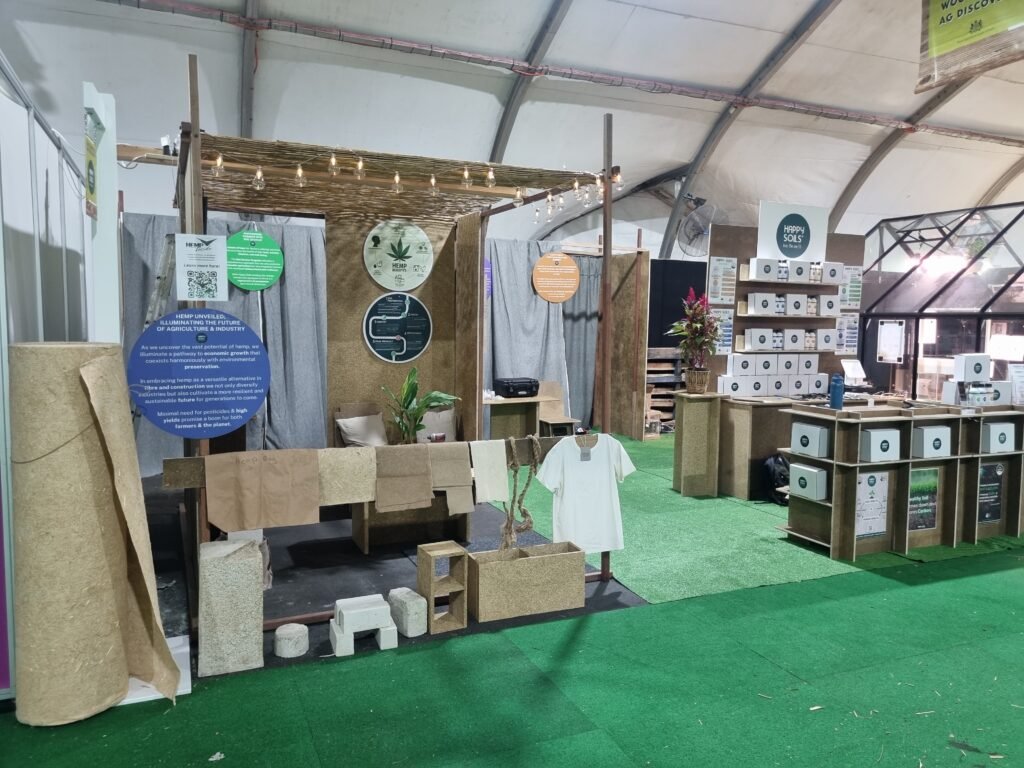
By Colin Steddy, Hemp Inside This year, I had the great privilege of joining Happy Soils (Andrew Meseha), Hexcore, and Why Not Consulting at the Sydney Royal Easter Show, thanks to an invitation from Duncan Kendall and the team at the Woolworths Discovery Centre. We bumped in on April 9, ready for gates to open on the 10th, and the energy was electric from day one — in fact, it was the biggest opening-day crowd in the show’s history. The Discovery Dome display stood out for all the right reasons. The entire fit-out — walls, tables, chairs, and cabinets — was crafted from ply board and furniture made by Hexcore using hemp materials. Hemp Gallery supplied beautiful hemp-made items, and I brought along hempcrete bricks, weed matting, samples of hurd and fibre, and hemp seed oil for sale. It was an honour to represent Hemp Inside and the broader Australian hemp industry. Public interest in hemp was strong and genuine. People came eager to share what they knew and to learn more — from curious newcomers to returning visitors tracking industry progress. Many asked, “Can I grow hemp on my land?” My answer was consistent: “We need to develop more markets and attract more investment to grow demand. Once that happens, we’ll be looking for more growers.” Andrew, Anastasia, their baby, and I were there every day — and yes, standing and talking non-stop for nearly two weeks was exhausting! But the support we received made it worthwhile. Visitors were enthusiastic, firemen stopped to see our display (including a video of the Hexcore house being tested in fire conditions), and Happy Soils customers shared encouraging results and plans to expand their use of the products. Media coverage? Disappointingly, not a single photo. But meaningful conversations made up for it — including promising follow-ups and exciting developments in the pipeline for Hexcore. I also had a valuable hour-long call with the NSW Department of Primary Industries, where I shared views on key obstacles holding back the industry: We must collaborate to build a strong, sustainable industry. The shift from the Office of Drug Control to the Department of Agriculture would unlock growth. It would create the policy certainty needed to attract serious investment. Right now, the perception that regulations could change overnight by the narcotics division scares off potential backers. Encouragingly, DPI is calling for industry submissions to help shape a stronger future. I urge everyone to contribute. One of the best compliments came from other exhibitors, who said the energy from our display was inspiring. Andrew’s love of music and fun made for a lively space — we even had a few dance moments with the crowd. The positivity was contagious. We bumped out on April 23 — a long stint on our feet, but a truly worthwhile experience. Big thanks to the Royal Agricultural Society, Duncan Kendall and his team, and our amazing crew: Andrew, Anastasia, Why Not Consulting, and Happy Soils. Let’s keep pushing forward. Cheers,Colin SteddyHemp Inside     Hemp at the 2025 Sydney Royal Easter Show Gallery

News, Building, Education, Growers, Manufacturers, Processors

An Industrial Hemp Hub for NSW Central West

YOUR INVITED TO A Meeting to discuss the formation of an Industrial Hemp Hub for the NSW Central West  When: Friday 22 November (11:00am and finish around 3:00pm) Where: WSU Transition Hub (corner of Mort & Bridge Streets, Lithgow) What: a two-part meeting to discuss:  what an Industrial Hemp Hub is and would do in the region (11:00-12:30pm)  an overview and feedback on known opportunities and interests in the Lithgow and Central Western Region (1:30-3:00pm).As part of the workshop, participants will visit the Lithgow Women’s Shed, a beautiful hempcrete build in progress. Background Who suggested this meeting? John Muir is working with Ken Dodds as part of a new CRC-P (Cooperative Research Centre) funded by the Federal Government and REVOX (a private company with links to Melbourne University). They are looking at recycling materials to mix with hemp and identify ‘hubs’ within regional rural communities with enough like-minded individuals, who would be willing to share resources and experience to create working supply chains that grow and supply a range of industrial hemp products. Why Lithgow? Lithgow is now home to one of the larger public buildings constructed with hempcrete. It’s s a region where local government is highly focused on regional development (including agriculture) as the area transitions away from coal. This makes it potentially eligible for transition funding once the State Government releases its program of Transition Authorities for regions like ours. Lithgow Transition Hub (Western Sydney University) A series of workshops will be hosted in Lithgow in February as part of an academic research program aimed at generated a ‘social-license’ for growing and manufacturing products from industrial hemp. That program will be led by Prof Neil Perry (WSU) with Prof Louise Crabtree (WSU), Dr Stephen Heally (WSU) and Dr Michelle Zeibots (UTS). This November meeting is being approached as an opportunity to scope the content, structure and discussion points for the more detailed workshops in February. If you would like to attend, please contact: Dr Michelle Zeibots MPIA CILT Senior Lecturer (Transport) School of Civil & Environmental Engineering Faculty of Engineering & Information Technology University of Technology Sydney M. 0408 437 687 PO Box 123 Broadway NSW 2007 Australia

Building, Manufacturers, News, Newsletter, Processors

Ashford Hemp Industries processing for the building industry

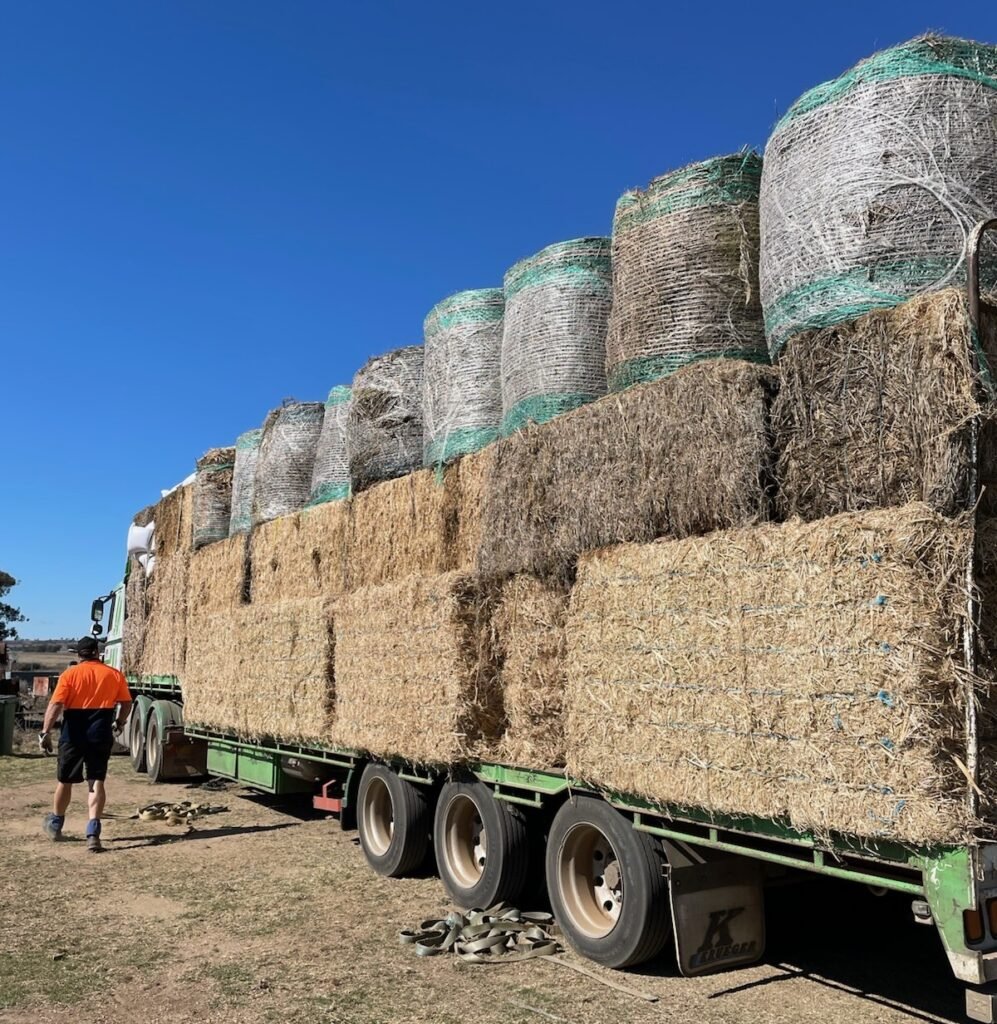
  Leon and Connie Minos have been riding a wave of increased enthusiasm and demand for their Ashford Hemp Industries’ products over the past decade.  Since developing their own hemp processing system in 2018 to address a bottleneck in the hemp industry, their business digressed from growing hemp in northwest NSW to designing and building the containerised Ashford Hemp Processor, or AHP. The first AHP was sold in Tasmania to the dynamic Andi Lucas of X-Hemp, followed by another sale in New Zealand and South Australia.  In 2024 Ashford Hemp Industries returned focus to increasing their local hemp supply by accessing quality hemp bales in their regional area. The consistent supply of quality hurd for the building sector had been impeded by a lack of regionally available suitable hemp bales which saw the processing facility at Ashford shut down for weeks at a time.  Connie and Leon are confident that this supply issue will be addressed in the coming season. Ashford Hemp Industries has been able to secure over 200 tonnes of excellent quality hemp bales from the Tamworth area, and expects this supply to more than double next year. In addition to providing employment for the small rural town of Ashford, the hemp processing facility expects to generate enough hemp hurd to allow two new house builds each week.  The increase in Australian grown and processed hurd will help supply a market which is longing for quality Australian hemp in their building products. With the Ashford processing facility running at full capacity, the Minos’ look forward to building their fourth Ashford Hemp Processor later this year.  Further information on Ashford Hemp Industries can be gathered from their Facebook page, website or email connie@ashfordhempindustries.com.

News, Building, Education, Newsletter, Past Events, Research

“Little Experiments, Big Crises” By: Amanda Marsh from Otetto 

By iHempNSW member Amanda Marsh from Otetto  On September 26th, we were invited to participate in a symposium titled “Little Experiments, Big Crises” hosted by Sydney University in collaboration with the Alistair Swayne Foundation. The symposium brought together architects, builders, manufacturers, and collaborators involved in the field of prefabrication. Otetto was invited to discuss the use of hemp and sustainability, during which we delivered a presentation followed by an open panel discussion with leading sustainability architect Alexander Symes, moderated by Jennifer McMaster of Trias Studio. It was an honour to contribute to such an engaging discussion focused on prefab housing in Australia, highlighting the ongoing tension between customisation and affordability. Harrison, co-founder of Otetto, showcased Otetto’s two offerings: off-the-plan hemp homes and the early developments of our Living Canvas prefabricated walling system; that save time and costs while promoting access to sustainable and healthier homes. A key takeaway from the event’s discussion was the need to shift people’s perceptions from customisation to standardisation, encouraging new home builders to embrace a curated, menu-like selection of home designs that are sustainable, accessible and highly liveable. We look forward to continuing this discussion and being part of the movement that highlights how the combination of prefabrication and locally-grown hemp is the change Australian homes need.

Building, Education, Growers, News, Processors, Research

A 25 year relationship with industrial hemp

A 25 year relationship with industrial hemp A pioneer and well respected champion of hempcrete, Klara Marosszeky, Founder & Managing Director of Australian Hemp Masonry shares her 25 year relationship with industrial hemp. By Kieren Anderson Can you describe the journey of the Australian Hemp Masonry Company from its inception in 1999 to its current position in the hemp construction industry? KM: The company was officially registered in 2014, but my involvement began in 1999 when I held a research licence with the Department of Health to conduct hemp varietal trials in New South Wales (NSW). At that time, DPI’s research suggested that hemp was not viable in NSW. I was one of the few licensed growers, holding licence number 3. In 2000, after reviewing available research, I created trial mixes of hempcrete and sent them to my brother for his expert opinion. He had extensive experience in building materials research and would provide a cautious assessment. I grew 2 hectares of Futura 75 hemp in Wollombi, harvesting it with a small group using a brushcutter. We built a mini processor at the University of New South Wales (UNSW) and began a self-funded research project at the Australian Centre for Construction. Progress was slow due to part-time teaching, work with Greening Australia, and a young family. What were some of the initial challenges you faced when introducing hemp as a building material in Australia, and how did you overcome them? KM: Initially, there was no precedent in Australia, apart from a Tasmanian project using imported materials. Limited English research on hemp building and minimal technical support presented challenges. The first significant hemp project in the UK, involving two townhouses in Suffolk, was completed in 2001. We faced a steep learning curve in understanding hemp construction and its adaptation to Australia’s diverse climates. This led to the development of a construction manual detailing best practices for hempcrete in Australia. We provided one-on-one technical support for builders and owner-builders, addressing challenges such as extreme weather events like Cyclone Oswald in 2013. Could you elaborate on the research and development process behind your building products? What were the key milestones and findings during this phase? KM: Early on, we explored achieving load bearing hempcrete, misled by online claims about its high strength. We later realised that hemp’s true benefits lie in its carbon sequestration, thermal performance, vapour permeability, the improved indoor air quality it gave, rather than its load-bearing capacity. We also learned that while adding excessive binder could create a load-bearing material, it compromised other important properties of hempcrete. How do you ensure the quality and durability of your hemp building products, especially considering the diverse climates they are used in across Australia and New Zealand? KM: Ensuring quality and durability involves using well-tested products, reliable manufacturers, and understanding climate-specific installation challenges. Training installers, collaborating with building designers, and providing strong technical support are crucial. Educating builders and designers will be an ongoing task until hemp construction becomes mainstream. We share insights from diverse projects in our training courses. With more published information and guidebooks, with recommended detailing, we can address various climate conditions in Australia, from cold and wet areas to hot and dry regions, as well as high humidity areas. How have partnerships and collaborations with regional processors influenced the evolution of your products and the scalability of your operations? KM: Emissions reduction was a core part of our vision, so regional partnerships and collaborations were essential. Introducing a novel building product like hemp required demonstrating its benefits plus its emissions reduction potential to stakeholders, including politicians. Building examples and partnerships across the country helped us gain acceptance and support. Can you share some insights into the regulatory environment surrounding hemp construction materials in Australia? How has it evolved over the years? KM: The regulatory environment has improved significantly. We now receive serious consideration from certifiers and building surveyors. Media coverage, such as on the ABC, has become more informed and positive. Most projects require development consent and certifier approval. We can provide a site-specific Performance Solution, documented product testing and international research to show how our materials meet National Construction Code standards. We also ensure designs are suitable for hemp construction, considering factors like roof overhangs and local weather. This year, we ‘re contributing to developing a Standards Handbook for Hemp Construction to hopefully further streamline approvals. What are some notable residential and commercial projects where Australian Hemp Masonry products have been used? Could you highlight a few that demonstrate the versatility and performance of your materials? KM: Notable projects include the Mildura Powerhouse Project, which features three buildings funded by federal, state, and regional governments. Innovation Centre at Byron Steiner School is Australia’s first hemp school building, praised for its carbon sequestration benefits and improved indoor climate. The award-winning hemp composting loo at Wilkins Green Public School in Sydney introduced hemp construction to city residents. The Caloundra hemp home, built by the community for a family with medical needs, highlighted hemp’s suitability for community projects. In terms of sustainability, Shepherds Ground Ecovillage in the Hunter Valley showcases eight small-footprint hemp homes built with locally grown hemp and timber. Other notable projects include several award-winning homes in NSW and the upcoming refurbishment of the old Forestry building at UTAS’s Hobart Campus, featuring internal hemp walls. In what ways do you collaborate with architects, building designers, and builders to promote the adoption of hempcrete in construction projects?  KM: We often receive design enquiries from individuals who have attended our training courses and approach their designers with our details and compliance information. We engage in discussions with designers and builders, especially for first-time hemp projects. Collaborating with organisations like MECLA is helping us to attract the attention of design practices, developers, and government. Looking forward, what are your goals and aspirations for the company in terms of innovation, expansion, and sustainability? KM: We are continuously involved in R&D with universities, currently collecting data on thermals, acoustics, and indoor air quality at UTS. We

Scroll to Top