News

outside a hempcrete build i
Building, News

Lithgow Women’s Shed in progress

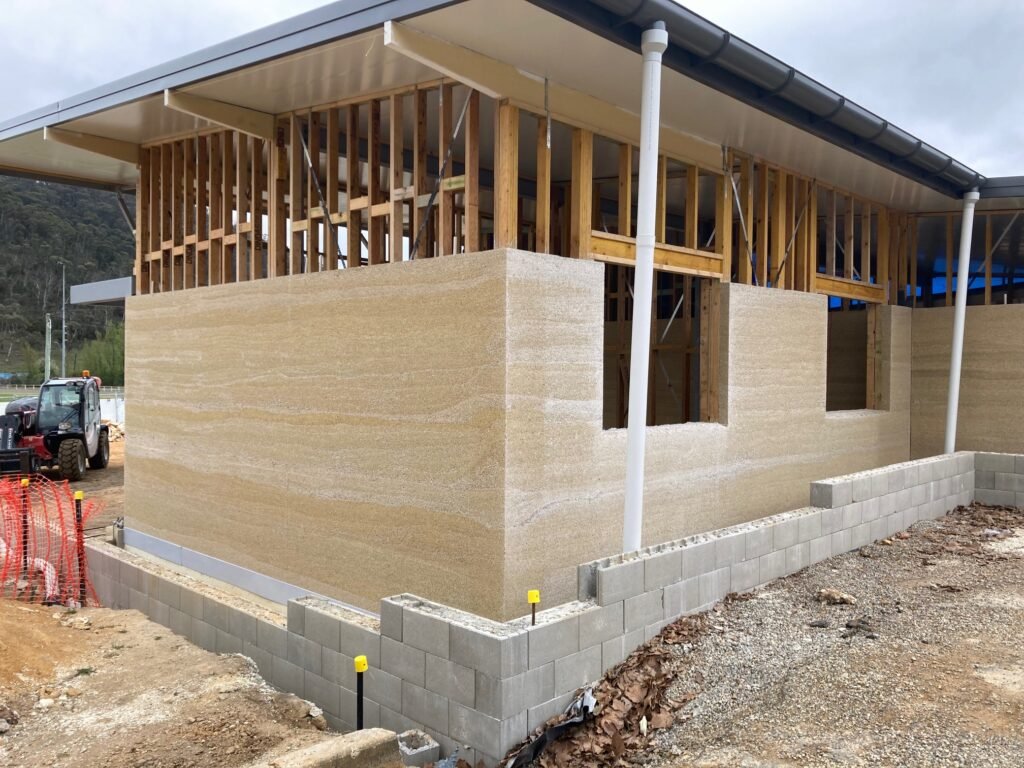
Hempcrete features in large public building construction of the Women’s Shed Construction of the Lithgow Women’s Shed has just reached an important milestone — completion of all its hempcrete walls. The finish is beautiful, and a big achievement given the record time in which the many volunteers (mostly women), were able to install the 40 cubic meters of hempcrete that cloak what will be a high-performance building. The volunteers were guided by an experienced team of carpenters working under Master Builder James Isaacs from Belubula Hemp Homes Pty Ltd. Arguably one of Australia’s most experienced hempcrete builders, James Isaacs has designed a unique system for formwork that enables large sections to be effortlessly lifted in minutes by a series of jacks that can be operated by one person. This innovative approach gives the building a superior high-end finish while at the same time saves many hours of labour, reducing the cost of hempcrete builds. ‘Years of sailing and handling rigging on small boats helped me to come up with the system,’ said James. ‘After the first couple of builds where the formwork was heavy at heights and difficult to manage, I thought to myself there must be an easier way. So I developed an interlocking slipform that simply raises the formboard when its full of hempcrete to the next level. With the right foresight, this can be achieved in minutes, reducing downtime of volunteer labour, enabling us to get through as many as 20 hempcrete mixes per day.’ The building will also be built to passivhaus standards as part of the vision for a building that breaks new ground. Building Designer Dick Clarke from Envirotecture has said ‘It’s the first commercial building in Australia built to these standards and we’re hoping it will set new standards for both the use of hempcrete and Passivhaus design.’ The building sits in a prime position at Lithgow Showground and will be one of the site visits on the itinerary for the Lithgow Hempcrete Hub Workshop planned for Friday 22 November.  Read more about the workshop here.

Manufacturers, News, Processors

An Industrial Hemp Hub for NSW Central West

YOUR INVITED TO A Meeting to discuss the formation of an Industrial Hemp Hub for the NSW Central West  When: Friday 22 November (11:00am and finish around 3:00pm) Where: WSU Transition Hub (corner of Mort & Bridge Streets, Lithgow) What: a two-part meeting to discuss:  what an Industrial Hemp Hub is and would do in the region (11:00-12:30pm)  an overview and feedback on known opportunities and interests in the Lithgow and Central Western Region (1:30-3:00pm). As part of the workshop, participants will visit the Lithgow Women’s Shed, a beautiful hempcrete build in progress. Background Who suggested this meeting? John Muir is working with Ken Dodds as part of a new CRC-P (Cooperative Research Centre) funded by the Federal Government and REVOX (a private company with links to Melbourne University). They are looking at recycling materials to mix with hemp and identify ‘hubs’ within regional rural communities with enough like-minded individuals, who would be willing to share resources and experience to create working supply chains that grow and supply a range of industrial hemp products. Why Lithgow? Lithgow is now home to one of the larger public buildings constructed with hempcrete. It’s s a region where local government is highly focused on regional development (including agriculture) as the area transitions away from coal. This makes it potentially eligible for transition funding once the State Government releases its program of Transition Authorities for regions like ours. Lithgow Transition Hub (Western Sydney University) A series of workshops will be hosted in Lithgow in February as part of an academic research program aimed at generated a ‘social-license’ for growing and manufacturing products from industrial hemp. That program will be led by Prof Neil Perry (WSU) with Prof Louise Crabtree (WSU), Dr Stephen Heally (WSU) and Dr Michelle Zeibots (UTS). This November meeting is being approached as an opportunity to scope the content, structure and discussion points for the more detailed workshops in February. If you would like to attend, please contact: Dr Michelle Zeibots MPIA CILT Senior Lecturer (Transport) School of Civil & Environmental Engineering Faculty of Engineering & Information Technology University of Technology Sydney M. 0408 437 687 PO Box 123 Broadway NSW 2007 Australia

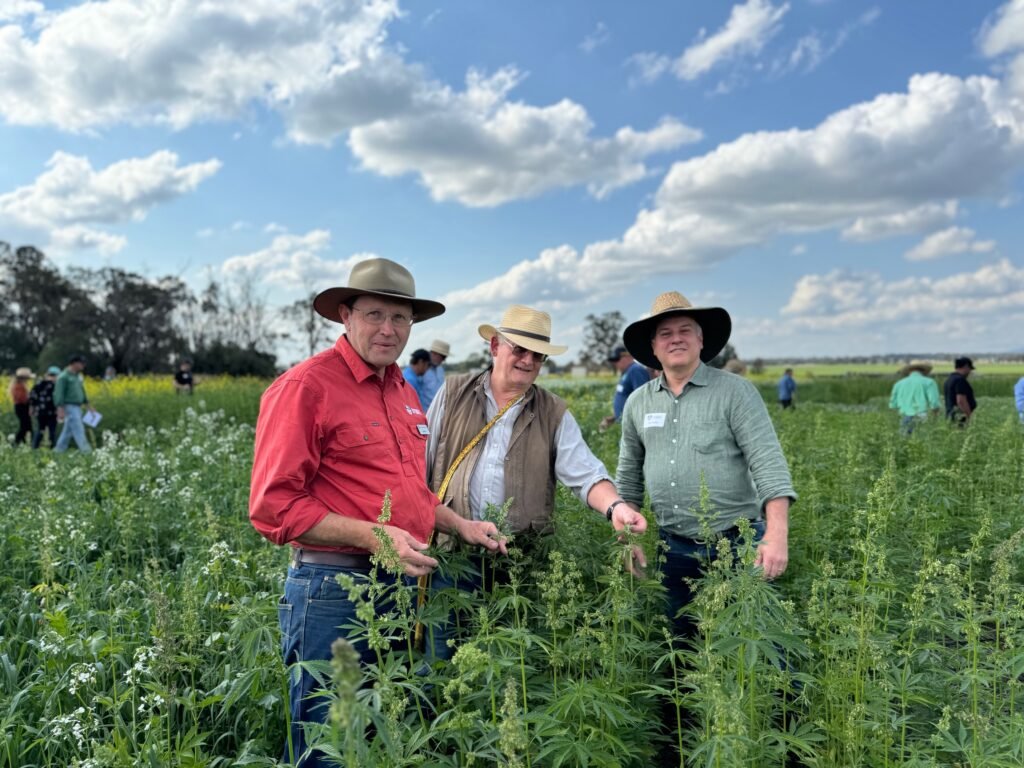
Three men standing
News

My Amazing Visit to China – By Colin Steddy

My Amazing Visit to China 4 -16 October 2024 By Colin Steddy – Hemp Inside Access to seed I flew to Xiamen and was driven to Zhangpu, to catchup with Mr Xu and his father Rong Long from ZHANGPU ZHONGLONG KENAF SEEDS CO, LTD. I first imported seed from Xu in 2017 after my visit in 2016 and have kept close contact since. We have formed a strong relationship. Working together with ideas on how to do more than just seed. China can now get permits to grow in most parts of China. The THC must be below 0.35 unless you have a breeding licence. Mr Xu has a breeding program with a government centre in China, paid for by Xu, looking at hybrid hemp seed production. For me, it was an interesting site visit because: we are talking new varieties of hemp the breeding program is looking at 4 tonnes per ha, so hemp can compete with soy. Currently there is a world shortage of hemp seed for food and planting seed. I am hearing reports of low yields and low germination across the world. ZHANGPU ZHONGLONG KENAF SEEDS CO, LTD has potential to produce eight hundred tonnes of planting seed for export around the world. Hunter Valley Hemp Seed & Grain, a new enterprise with Bob and Susan Doyle and myself. We will be growing the Chinese varieties in early 2025 for planting in the 2025 September season. We will also export. Please contact me for information. Details below. Research needed New research needs to be done on the flowering and pollen drop with dioicous varieties. With the findings that seed from around the world is having issues with low seed germination and bad vigour. We thought this was to do with heat and temperature; there is more to learn about the flowering times especially in diecious varieties. Mr Xu and I have been working on a seed testing protocol. When male pollen falls, are the females ready and what are the weather conditions? Is it cold and wet are the day length short? This looks like the results at Hamilton in Victoria for the long season varieties. Because of cold short days there was little seed produced exactly as I have been suggesting. Long season seed crops should be grown in the north then moved south for fibre and biomass production. Could this also be a result of germination rates falling quickly and low plant vigour? We are looking for the collection of flowering and weather conditions in relation to germination rate drop and low seed vigour. I would like our researchers to look at this. Exploring seed testing protocols We are looking at building new seed testing protocols on how to monitor what might happen with seed longevity. The hemp industry in Australia needs to keep all data from planting and fertiliser inputs and timing. What triggers THC spikes? Why do seeds loose germination? Fibre quality, planting density (plants per m2) and fertilise can have an enormous impact. Let alone how the machinery and retting occur. Know the spec from the end user? In the north of Australia long season varieties continually get higher grain yields. South European, and some Australian varieties do better than in the hot north. How you move the varieties in latitude will give you a different outcome, seed size, yield, or biomass. This also happens in China just south to north. See AgriFutures hemp trial results from all sites in Australia. The one thing that has not been calculated in the result is grain yield/price and biomass price. As a grower we need to know the total income from a crop. You can work this out yourself. Find the yields of biomass and seed and give them a value on current market. I work on $2.65 for grain and $3.50 for biomass as the stalk is less value than just a biomass crop. Currently in China there is a large demand for hemp fibre and China is sourcing fibre from every corner of the world. Is your fibre going into textiles, insulation, weed matting or paper? Each end product requires different specs and price. How much hurd can be in the fibre? Or is it a whole stalk product? My visit to a textile mill I visited a textile mill in Shanghai (CPL) that want to purchase textile fibre from Australia; the mill makes clothing, with hemp blended with other fibres. Lisa was my interpreter and looked after me. Their demand is growing, and they could be looking for up to 10,000 tonnes! Once again, I was treated like a king and taken to dinner and sightseeing to Xitang, an old Chinese town. Usually it is very crowed, but it was raining and was thankfully incredibly quiet. The market was a maze of thin walkways with shops selling food and a vast array of items big and small. It was very beautiful. This mill has a contact living in South Australia. His name is Yao Yang, and he kindly organised my visit. I wanted to see the fibre quality they need so I can help Australian growers and processors meet the specifications. Today there is a massive shortage of textile hemp fibre – how long it will last, we do not know. I introduced them to Mr Xu, my friend in Zhangpu. Unlike Australia, the industry in China is large and they were not familiar with each other. Along with Lisa, my interpreter, Mr Chunlei Hou and Professor Fan, a polymer academic took me to lunch. They were very warm and friendly. Before we drove to the mill, we discussed growing the right fibre, retting and what spec they need. They have some samples from Australia that need to have less hurd – below 10% is ok. The only mill I know that is close to their spec is Gary Rogers in WA and Bob and Susan Doyles’ that needs a few modifications to clean the fibre and the dust extraction.

Education, Growers, News, Research, Rural Supplies, Seed Supplies

Murray Industrial Hemp Launches Seed Funding Opportunity

Murray Industrial Hemp Launches Seed Funding Opportunity  October 10th, 2024 Murray Industrial Hemp P/L (MIH), an innovative leader in sustainable hemp cultivation and industrial building products, is excited to announce the launch of its Seed Funding Investment Memorandum. This investment opportunity marks a significant step in the MIH journey to expand its operations and enhance its impact in the rapidly growing industrial hemp market. MIH is inviting strategic investors to join its mission to transform the industrial hemp industry by participating in its seed funding round. The funds raised will be allocated to building business infrastructure, covering initial startup operational expenses, expanding a strong grower network, advancing a seed breeding program, partnering with an industry-leading carbon accounting firm and driving market growth. Key Investment Highlights: • Sustainable Agriculture Focus: MIH is committed to developing a strong grower base through innovative hemp production techniques that support sustainable agriculture. • Growth Potential: With a strong network of strategic partnerships, including collaborations with established local and overseas hemp companies, and research institutions, MIH is well-positioned to scale rapidly in a sector experiencing exponential growth. • Community-Centric Approach: MIH is dedicated to providing long-term benefits to local communities through job creation and environmentally sustainable practices. “We are at the forefront of a transformative moment in the hemp industry, providing opportunities to shorten the value chain by focusing on delivering sustainable building products,” said Project Lead Leigh Fletcher, of Murray Industrial Hemp P/L. “This seed funding round will accelerate our growth and innovation efforts, allowing us to expand operations, develop advanced hemp technologies, and explore new markets.” Prospective investors can access the condensed Investment Memorandum here or contact Leigh Fletcher of the MIH Investment Team info@murrayindustrialhemp.com.au or call 0429 144 743.  

Manufacturers, News, Processors

Ashford Hemp Industries processing for the building industry

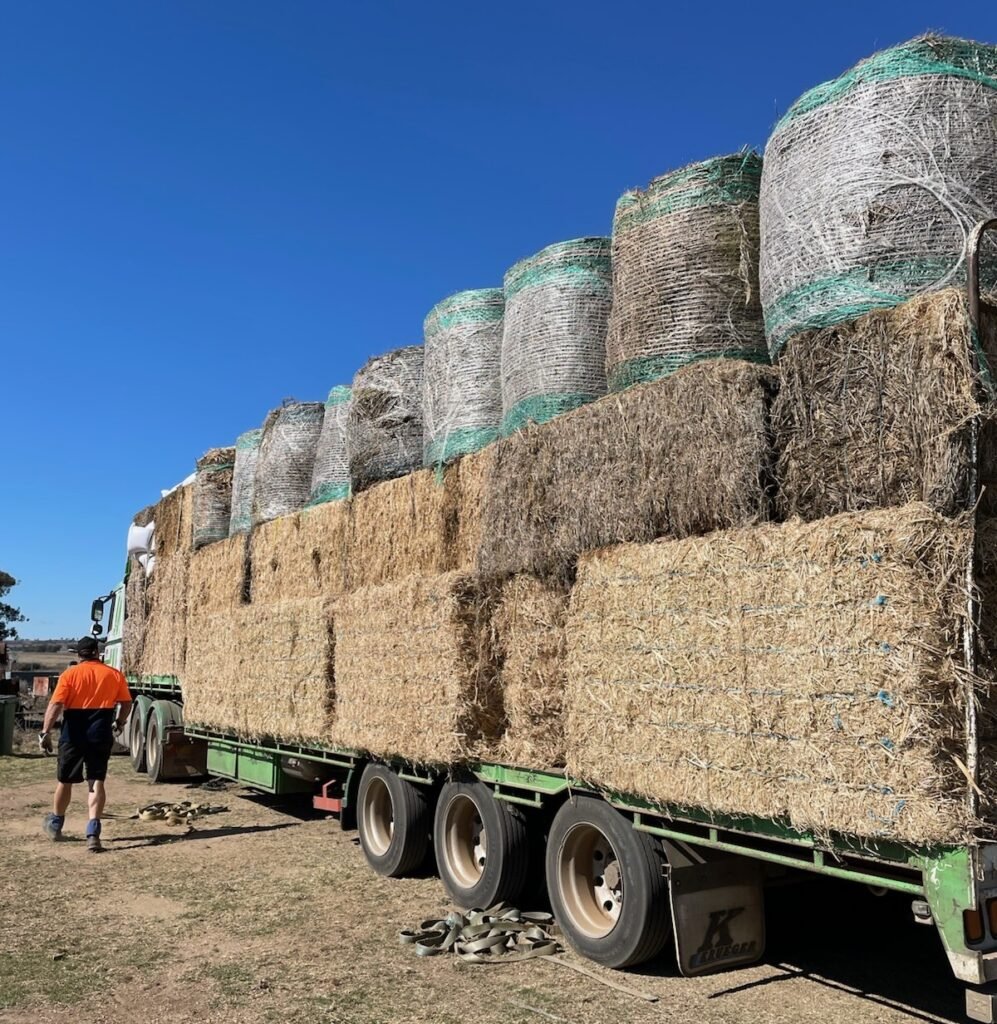
  Leon and Connie Minos have been riding a wave of increased enthusiasm and demand for their Ashford Hemp Industries’ products over the past decade.  Since developing their own hemp processing system in 2018 to address a bottleneck in the hemp industry, their business digressed from growing hemp in northwest NSW to designing and building the containerised Ashford Hemp Processor, or AHP. The first AHP was sold in Tasmania to the dynamic Andi Lucas of X-Hemp, followed by another sale in New Zealand and South Australia.  In 2024 Ashford Hemp Industries returned focus to increasing their local hemp supply by accessing quality hemp bales in their regional area. The consistent supply of quality hurd for the building sector had been impeded by a lack of regionally available suitable hemp bales which saw the processing facility at Ashford shut down for weeks at a time.  Connie and Leon are confident that this supply issue will be addressed in the coming season. Ashford Hemp Industries has been able to secure over 200 tonnes of excellent quality hemp bales from the Tamworth area, and expects this supply to more than double next year. In addition to providing employment for the small rural town of Ashford, the hemp processing facility expects to generate enough hemp hurd to allow two new house builds each week.  The increase in Australian grown and processed hurd will help supply a market which is longing for quality Australian hemp in their building products. With the Ashford processing facility running at full capacity, the Minos’ look forward to building their fourth Ashford Hemp Processor later this year.  Further information on Ashford Hemp Industries can be gathered from their Facebook page, website or email connie@ashfordhempindustries.com.

News, Research

Biosecurity Alert!

News from Biosecurity Harrisia Cactus is a pesty biosecurity matter that appears to be creeping in. WE DO NOT WANT IT!!!! For those in the Narrabri region, please if you can, turn up to the Pilliga Pub on Tuesday the 29th of October and familiarise yourself with this plant and what it can do to your land. Please share this to other landowners. We need you all to be vigilant and help us to help you to protect your land.  It has the potential to take over.

A box with sample size containers of Northern Rivers Hemp products.
News

Northern Rivers Hemp is thriving!

Northern Rivers Hemp Cooperative  By Crystal White Spring has sprung in the Northern Rivers region although there has certainly been some cooler days lingering and even a few nights beside the fire! This month we have launched our Trial Trio gift set, finalised our market setup and started spreading the word at markets about how great hemp is! We’ve also made an exciting discovery of CBL Cannabicyclol and we are supporting and have donated to the AHC Paws For Wellness Campaign. This is vital for our whole Australian Hemp industry to get behind! Launch of our Trial Trio box. This beautifully curated set includes an indulgent collection of three of our top selling rejuvenating products. Each of the 10mL samples is perfect for friends and family who are perhaps new to Full Spectrum Hemp Oils and seeking the benefits of 100% natural skincare and wellness products. If you are thinking of gifting, this is the perfect introduction to Full Spectrum Hemp! Our 2024 Trial Trio includes: FACE, a luxurious natural face cream that targets aging and damaged skin with its potent, rejuvenating formula Deep Hemp, a full-spectrum whole plant hemp infusion that delivers soothing relief from life’s aches, pains and stiffness. Your muscles and bones can thank us later!  Full-Spectrum Hemp Oil in Olive Oil, perfect for enhancing overall skin hydration and reducing signs of aging as well as soothes skin irritations, blemishes and bites. Markets We are ready to roll into the market scene with our marquee and advertising looking schmick! Although we don’t have a set market schedule, you’ll see us popping up from time to time at markets in Northern Rivers and into Southern Queensland. Farmers Chris and Tommy set up and had a great time at the Sample food festival at Bangalow last month, which attracted huge crowds and was a great launch for our first market right in the heart of the Northern Rivers region.  We have also just done a weekend collab with Hinterland Hemp. Exciting new test results -CBL Cannabicyclol We now have access to a new testing machine in Northern Rivers area that is able to test for many more Cannabinoids and terpenes.  This means we can really narrow down what we are getting from our grows and cultivars by analysing the results. Surprisingly our results from last season’s grow on all 7 farms growing our King Gee Cultivar has shown a very interesting lesser known and scarce cannabinoid called CBL- CANNABICYCLOL.   It is not new – it was first discovered by Raphael Mechoulam’s Israeli team of researchers in 1966. It is exciting to see this in our results although CBL is one of the lesser studied minor cannabinoids scientists are studying it and believe it may have pain-relieving, anti-inflammatory properties. Paws for wellness Did you know hemp seed and hemp seed oil is legal for human consumption, but not for animals?!?! Crazy right! The Australian Hemp Council has launched the “Paws for Wellness” campaign to raise funds for the legalisation of hemp seed for pets and companion animals in Australia. Northern Rivers Hemp is in support of this campaign and we have donated to paws for wellness so that we as a industry can make steps towards getting hemp back on the table for our pets- after all they certainly do deserve the best! If you think your pet deserves the best and that you should have choice over what you pet can consume we strongly recommend making a donation to the Paws for Wellness Campaign. Happy hemping!

Education, News, Research

“Little Experiments, Big Crises”

By iHempNSW member Amanda Marsh from Otetto  On September 26th, we were invited to participate in a symposium titled “Little Experiments, Big Crises” hosted by Sydney University in collaboration with the Alistair Swayne Foundation. The symposium brought together architects, builders, manufacturers, and collaborators involved in the field of prefabrication. Otetto was invited to discuss the use of hemp and sustainability, during which we delivered a presentation followed by an open panel discussion with leading sustainability architect Alexander Symes, moderated by Jennifer McMaster of Trias Studio. It was an honour to contribute to such an engaging discussion focused on prefab housing in Australia, highlighting the ongoing tension between customisation and affordability. Harrison, co-founder of Otetto, showcased Otetto’s two offerings: off-the-plan hemp homes and the early developments of our Living Canvas prefabricated walling system; that save time and costs while promoting access to sustainable and healthier homes. A key takeaway from the event’s discussion was the need to shift people’s perceptions from customisation to standardisation, encouraging new home builders to embrace a curated, menu-like selection of home designs that are sustainable, accessible and highly liveable. We look forward to continuing this discussion and being part of the movement that highlights how the combination of prefabrication and locally-grown hemp is the change Australian homes need.

News, Research

A 25 year relationship with industrial hemp

A 25 year relationship with industrial hemp A pioneer and well respected champion of hempcrete, Klara Marosszeky, Founder & Managing Director of Australian Hemp Masonry shares her 25 year relationship with industrial hemp. By Kieren Anderson Can you describe the journey of the Australian Hemp Masonry Company from its inception in 1999 to its current position in the hemp construction industry? KM: The company was officially registered in 2014, but my involvement began in 1999 when I held a research licence with the Department of Health to conduct hemp varietal trials in New South Wales (NSW). At that time, DPI’s research suggested that hemp was not viable in NSW. I was one of the few licensed growers, holding licence number 3. In 2000, after reviewing available research, I created trial mixes of hempcrete and sent them to my brother for his expert opinion. He had extensive experience in building materials research and would provide a cautious assessment. I grew 2 hectares of Futura 75 hemp in Wollombi, harvesting it with a small group using a brushcutter. We built a mini processor at the University of New South Wales (UNSW) and began a self-funded research project at the Australian Centre for Construction. Progress was slow due to part-time teaching, work with Greening Australia, and a young family. What were some of the initial challenges you faced when introducing hemp as a building material in Australia, and how did you overcome them? KM: Initially, there was no precedent in Australia, apart from a Tasmanian project using imported materials. Limited English research on hemp building and minimal technical support presented challenges. The first significant hemp project in the UK, involving two townhouses in Suffolk, was completed in 2001. We faced a steep learning curve in understanding hemp construction and its adaptation to Australia’s diverse climates. This led to the development of a construction manual detailing best practices for hempcrete in Australia. We provided one-on-one technical support for builders and owner-builders, addressing challenges such as extreme weather events like Cyclone Oswald in 2013. Could you elaborate on the research and development process behind your building products? What were the key milestones and findings during this phase? KM: Early on, we explored achieving load bearing hempcrete, misled by online claims about its high strength. We later realised that hemp’s true benefits lie in its carbon sequestration, thermal performance, vapour permeability, the improved indoor air quality it gave, rather than its load-bearing capacity. We also learned that while adding excessive binder could create a load-bearing material, it compromised other important properties of hempcrete. How do you ensure the quality and durability of your hemp building products, especially considering the diverse climates they are used in across Australia and New Zealand? KM: Ensuring quality and durability involves using well-tested products, reliable manufacturers, and understanding climate-specific installation challenges. Training installers, collaborating with building designers, and providing strong technical support are crucial. Educating builders and designers will be an ongoing task until hemp construction becomes mainstream. We share insights from diverse projects in our training courses. With more published information and guidebooks, with recommended detailing, we can address various climate conditions in Australia, from cold and wet areas to hot and dry regions, as well as high humidity areas. How have partnerships and collaborations with regional processors influenced the evolution of your products and the scalability of your operations? KM: Emissions reduction was a core part of our vision, so regional partnerships and collaborations were essential. Introducing a novel building product like hemp required demonstrating its benefits plus its emissions reduction potential to stakeholders, including politicians. Building examples and partnerships across the country helped us gain acceptance and support. Can you share some insights into the regulatory environment surrounding hemp construction materials in Australia? How has it evolved over the years? KM: The regulatory environment has improved significantly. We now receive serious consideration from certifiers and building surveyors. Media coverage, such as on the ABC, has become more informed and positive. Most projects require development consent and certifier approval. We can provide a site-specific Performance Solution, documented product testing and international research to show how our materials meet National Construction Code standards. We also ensure designs are suitable for hemp construction, considering factors like roof overhangs and local weather. This year, we ‘re contributing to developing a Standards Handbook for Hemp Construction to hopefully further streamline approvals. What are some notable residential and commercial projects where Australian Hemp Masonry products have been used? Could you highlight a few that demonstrate the versatility and performance of your materials? KM: Notable projects include the Mildura Powerhouse Project, which features three buildings funded by federal, state, and regional governments. Innovation Centre at Byron Steiner School is Australia’s first hemp school building, praised for its carbon sequestration benefits and improved indoor climate. The award-winning hemp composting loo at Wilkins Green Public School in Sydney introduced hemp construction to city residents. The Caloundra hemp home, built by the community for a family with medical needs, highlighted hemp’s suitability for community projects. In terms of sustainability, Shepherds Ground Ecovillage in the Hunter Valley showcases eight small-footprint hemp homes built with locally grown hemp and timber. Other notable projects include several award-winning homes in NSW and the upcoming refurbishment of the old Forestry building at UTAS’s Hobart Campus, featuring internal hemp walls. In what ways do you collaborate with architects, building designers, and builders to promote the adoption of hempcrete in construction projects?  KM: We often receive design enquiries from individuals who have attended our training courses and approach their designers with our details and compliance information. We engage in discussions with designers and builders, especially for first-time hemp projects. Collaborating with organisations like MECLA is helping us to attract the attention of design practices, developers, and government. Looking forward, what are your goals and aspirations for the company in terms of innovation, expansion, and sustainability? KM: We are continuously involved in R&D with universities, currently collecting data on thermals, acoustics, and indoor air quality at UTS. We

Scroll to Top